
Why This One Actually Works for Low Vision
Why I Tried This 4-in-1 Adjustable Measuring Cup
Measuring liquids has always been one of those kitchen tasks that looks simple — until it isn’t.
Traditional measuring cups rely heavily on visual precision: thin lines, clear plastic, glare, and markings that disappear depending on lighting. For someone with low vision, that turns a basic step into guesswork.
I didn’t need a better recipe.
I needed a more forgiving way to measure liquids accurately.
That’s what led me to try the 4-in-1 adjustable measuring cup.
What This Tool Is (In Plain Language)
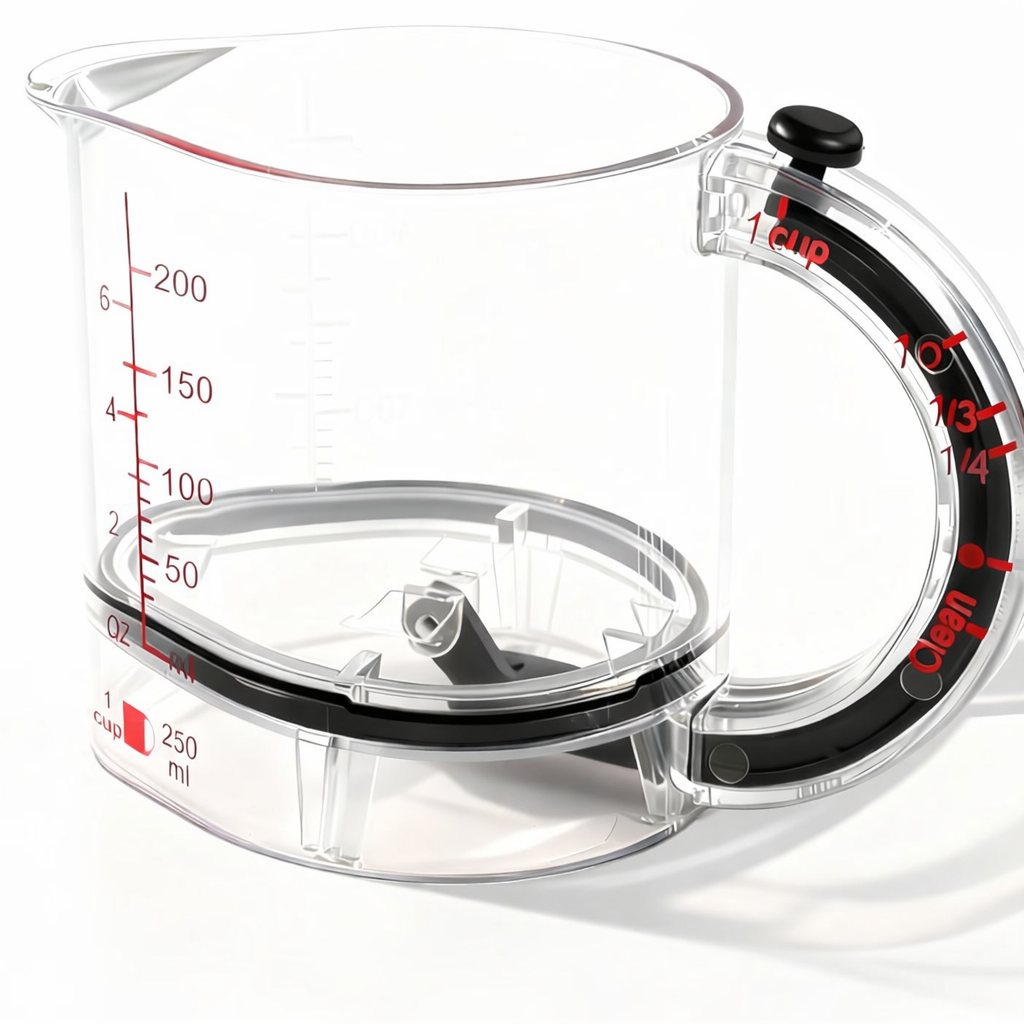
This measuring cup uses a sliding internal plunger instead of traditional measurement lines.
You set the amount you need — for example, ¼ cup, ⅓ cup, or 1 cup — and then pour the liquid in. When you press the plunger, the liquid is released at the exact amount you selected.
There’s no bending down to eye level.
No trying to line up markings.
No second-guessing.
How I Use It in Real Life
I primarily use this measuring cup for liquids, including:
- Oils
- Water
- Milk
- Broth
- Vinegar
I set the measurement using the raised, clearly labeled handle, pour directly from the bottle, and release the liquid into the bowl or pan.
What I appreciate most is that I can:
- Measure without hovering
- Keep the cup on a stable surface
- Use the same motion every time
It removes a decision point — and those add up quickly in the kitchen.
This measuring cup works best for me as part of a broader system for measuring liquids with low vision. I describe that process in more detail here:
👉 How I Measure Liquids Without Relying on Sight
What Works Well for Low Vision
Several design choices make this cup especially helpful:
- No reliance on fine measurement lines
The measurement is set once, then confirmed by feel and placement. - High-contrast markings on the handle
The numbers are easier to see than standard cup markings. - Consistent pouring method
I don’t have to adjust how I measure from one ingredient to the next. - Good stability
The wide base helps keep the cup from tipping while pouring.
Most importantly:
I don’t have to guess when I’ve reached the right amount.
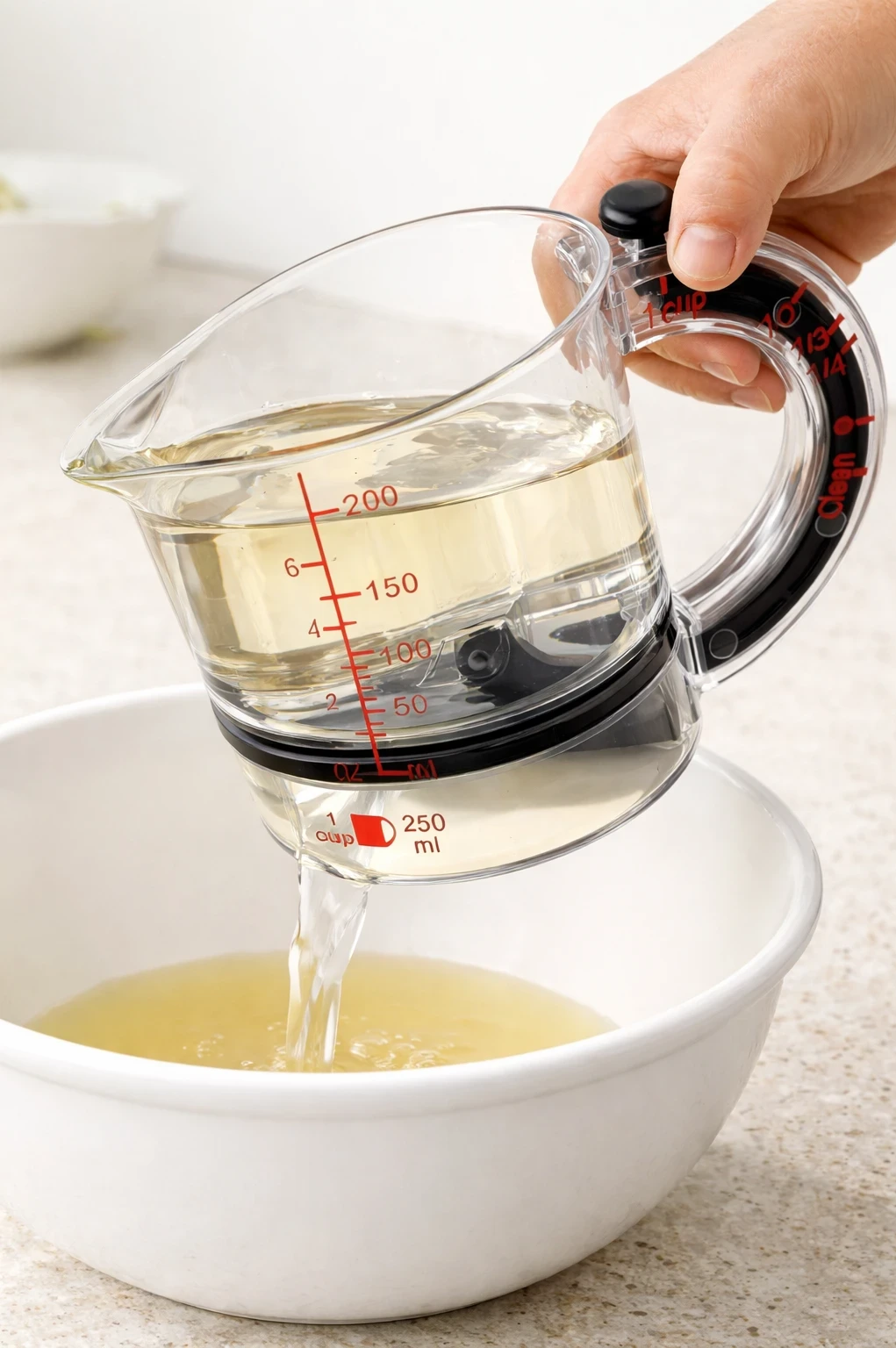
The plunger design reduces the need to check measurement lines, supporting more confident liquid measuring for low vision cooks.
Where It Falls Short
This cup isn’t perfect, and it’s worth knowing its limits.
- It’s best for liquids, not dry ingredients
- Thicker liquids can sometimes cling and require an extra tap
- It takes a little practice to trust the plunger system at first
If you prefer traditional cups or rely heavily on dry measurements, this won’t replace everything.
Who I Think This Is Best For
This measuring cup is especially helpful for:
- People with low or fluctuating vision
- Anyone who struggles with seeing measurement lines
- Cooks who want consistency more than speed
- People who measure liquids frequently
It may not be ideal for:
- Baking that requires many different dry measurements
- Anyone who prefers minimal kitchen tools
Would I Buy It Again?
Yes.
Not because it’s flashy — but because it reduces friction.
It lets me measure liquids with confidence instead of caution, and that makes cooking feel smoother and more enjoyable.
How This Fits Into My Larger Kitchen System
This cup works best as part of a layered approach:
- Tactile markers on appliances
- High-contrast labels on containers
- Tools that reduce visual strain
It doesn’t replace every measuring tool, but it fills a specific gap — and fills it well.
Not every tool needs to do everything.
This one does its job quietly and reliably.
Where to Find It
These measuring cups are available in several places.This is the 4-in-1 adjustable measuring cup I use for liquid measurements.
A Few Words Before You Go
This measuring cup didn’t make my kitchen perfect.
What it did was remove one small but persistent frustration — and that matters more than it sounds. When tools work with you instead of demanding extra effort, cooking becomes less about compensating and more about enjoying the process again.
And sometimes, that’s exactly what makes a tool worth keeping.