Simple, Real-Life Steps to Help You Regain Confidence and Independence
If you’re new to vision loss, things can feel overwhelming at first. Everyday tasks like making coffee or finding your keys may suddenly turn into frustrating, time-consuming challenges. I’ve been there. I remember how quickly small changes started piling up—and how hard it was to figure out what to do next.
This isn’t just about learning to “get by.” It’s about finding ways to make life work again—step by step, in a way that feels manageable.
If you’re not sure where to begin on this site, you can also visit the Start Here page for a quick overview. But if you’d rather walk through this one step at a time, you’re in the right place.
💬 The Emotional Side No One Warns You About
After dealing with the immediate practical challenges, the emotional side of vision loss really began to surface for me. Although I thought I was emotionally prepared for this journey—after helping my mother through the same experience—I discovered that I still needed to work through those stages myself. There were waves of anxiety, frustration, and sadness, often triggered by something as simple as struggling with a task that used to be automatic.
What helped me most was learning to face those emotions instead of pushing them aside. Talking about what I was feeling—with friends, family, or even a support group—made things feel less isolating. I also had to give myself permission to grieve. It’s natural to miss the way things used to be, and acknowledging that helped me move forward instead of staying stuck.
At the same time, I started to notice the value of small wins. Something as simple as making tea on my own became a reminder that I was still capable of adapting. Over time, I also found that speaking with a counselor helped me put words to feelings I didn’t fully understand at first.
👉 If this part of the journey feels especially heavy, I talk more about it here:
Emotional Wellness After Vision Loss
Learning daily living skills matters—but emotional adjustment is just as important. Once I began working through that side of things, I was finally able to focus on what to do next.
🔍 What “Starting” Really Means
Losing vision—whether gradually or suddenly—changes how you interact with everything around you. In those early days, I found myself moving between denial, curiosity, and determination, sometimes all in the same afternoon.
What I came to understand is this: starting doesn’t mean having everything figured out. It means being willing to try new approaches, make mistakes, accept help, and learn as you go.
Small wins matter more than big breakthroughs at this stage. Pouring a glass of water without spilling it or finding something without searching for ten minutes may seem minor—but those are the moments that begin to rebuild confidence.
🏠 Goal One: Make Your Home Easier to Navigate
One of my first challenges wasn’t just avoiding obstacles—it was being able to find things without frustration. When everything starts to look the same, even simple tasks slow down.
What helped me most was creating consistency. I began keeping things in the same place every time so I didn’t have to rely on searching. Reducing visual clutter also made a noticeable difference. When too many items were grouped together, it became harder to tell anything apart. Simplifying what I kept out—and grouping similar items—made everyday tasks feel much more manageable.
I also started using contrast and tactile cues to identify items more quickly, and made sure the things I used most were easy to reach instead of buried behind something else. These weren’t major changes, but together they removed a lot of daily frustration.
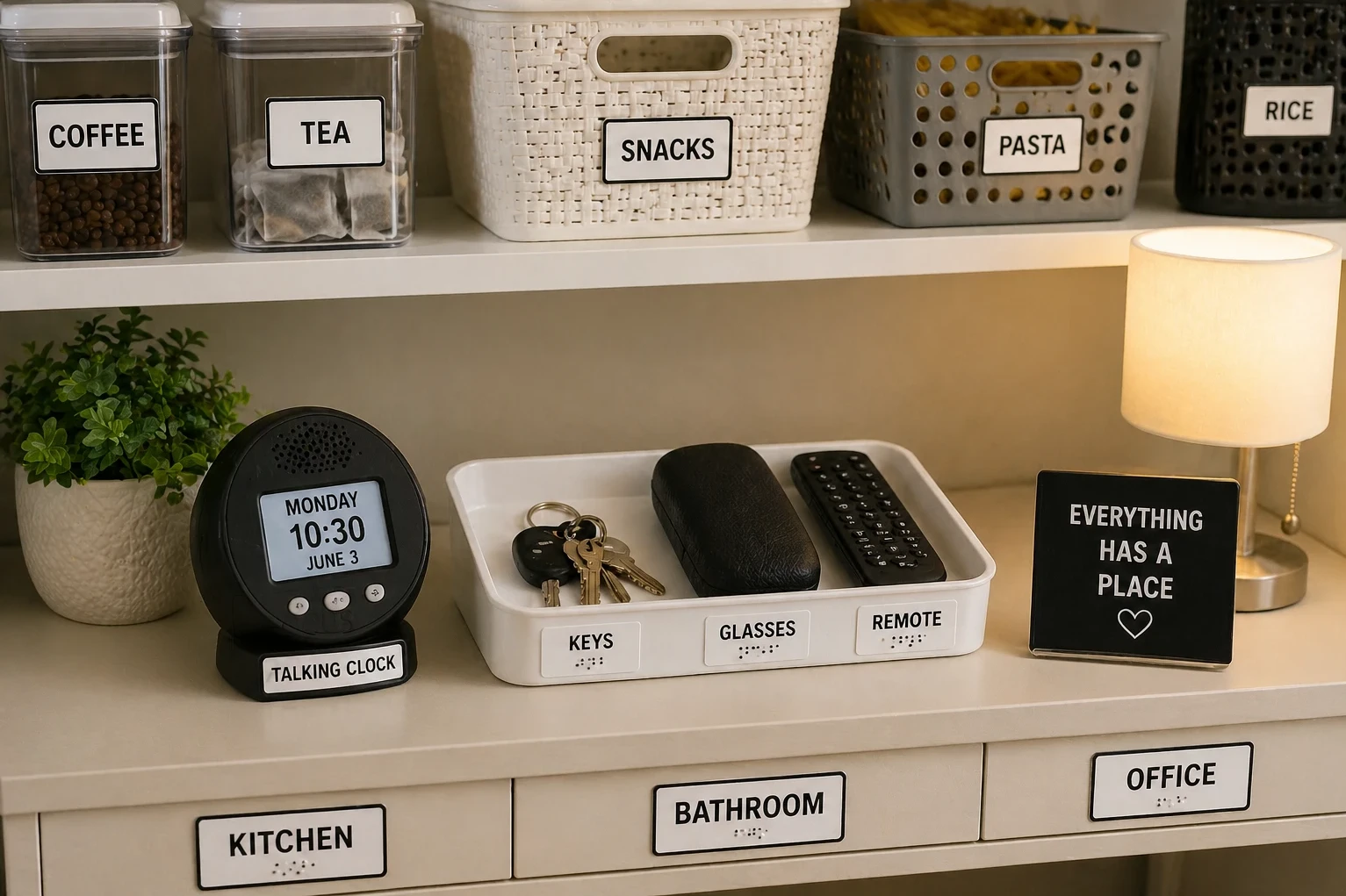 Simple labeling, consistent placement, and a few everyday tools can make it much easier to find what you need without frustration.
👉 If you want a simple, practical place to begin, I walk through my full approach here:
Home Organization Ideas That ActuallyWork
⚠️ Goal Two: Lower the Risk of Getting Hurt
Safety quickly becomes a priority
when you can’t see hazards the way you used to. I realized early on that I needed to be more aware of things like sharp edges, wet floors, and open doors.
A few simple adjustments made a big difference. Adding non-slip mats in the kitchen and bathroom helped prevent falls. Foam edge guards on furniture reduced the risk of injury, and installing grab bars and handrails gave me more confidence moving around. Even something as simple as consistently closing cabinet doors helped eliminate unexpected hazards.
Being proactive changed how I felt in my own space. Instead of moving cautiously all the time, I started to feel more confident and in control.
👉 As confidence builds, many people naturally move into kitchen safety and daily task strategies. If that’s where you’re headed next, you might find this helpful:
Kitchen Workflow That Makes CookingEasier
🧰 Goal Three: Learn One Helpful Tool at a Time
One of the biggest mistakes I made early on was trying to learn too many tools at once. It quickly became overwhelming.
What worked better was focusing on just one tool to start. For me, that was a talking clock—and at the time, it made a huge difference in my daily routine. There were no voice assistants like Alexa or Google Assistant back then, so I used what was available and adapted as new tools came along.
Even now, many of those same tools are still around—and for good reason. It’s not about choosing the newest or most advanced option. It’s about starting with what feels comfortable and manageable for you, and building from there.
Today, you have more choices, but the approach is the same. Whether it’s a magnifier, a large-button device, or a voice assistant, the key is to pick one thing that fits naturally into your routine and go from there.
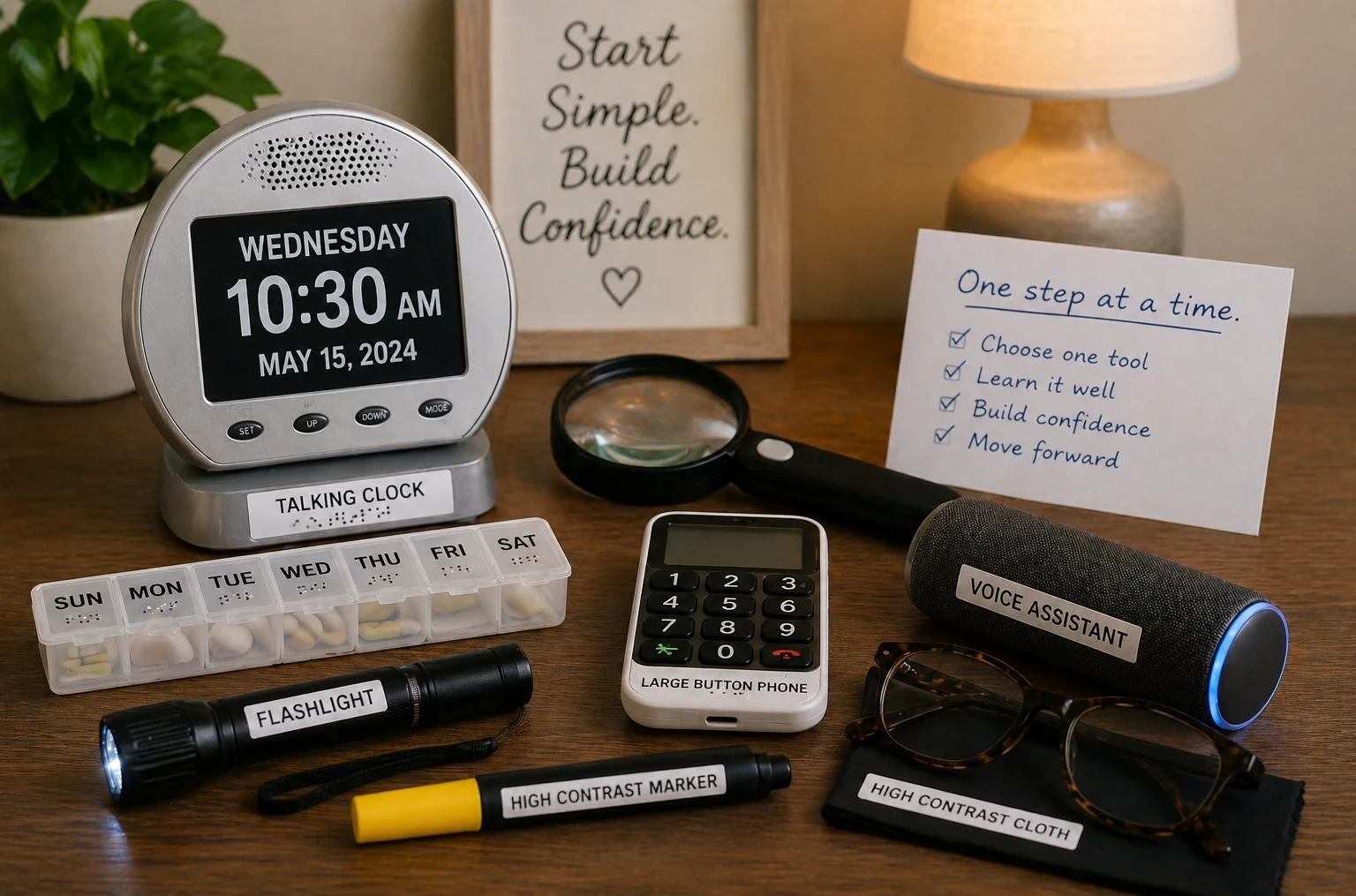 Start with one tool that feels comfortable and build from there—simple choices can make everyday life easier and more manageable.
👉 If you’re wondering what tools are actually worth trying—and which ones you can skip—I’ll be putting together a guide to help sort through that.
👉 And if you’re working on identifying items more easily:
Labeling And Organization Tools That Make Life Easier With Low Vision
May 23, 2025 by Sylvia
🔑 Goal Four: Build Simple Systems to Find Your Stuff
One of the most frustrating parts of vision loss is losing the ability to visually scan a room. Keys, remotes, glasses—things seem to disappear constantly.
What made the biggest difference for me was creating simple, repeatable systems. I started following an “everything has a place” rule, where certain items always went in the same spot. Trays and baskets helped contain smaller items so they didn’t get scattered, and tactile markers made it easier to identify things by touch instead of sight.
At first, these routines felt a little rigid. But over time, they became second nature—and much more freeing than frustrating. I spent less time searching and more time just getting on with my day.
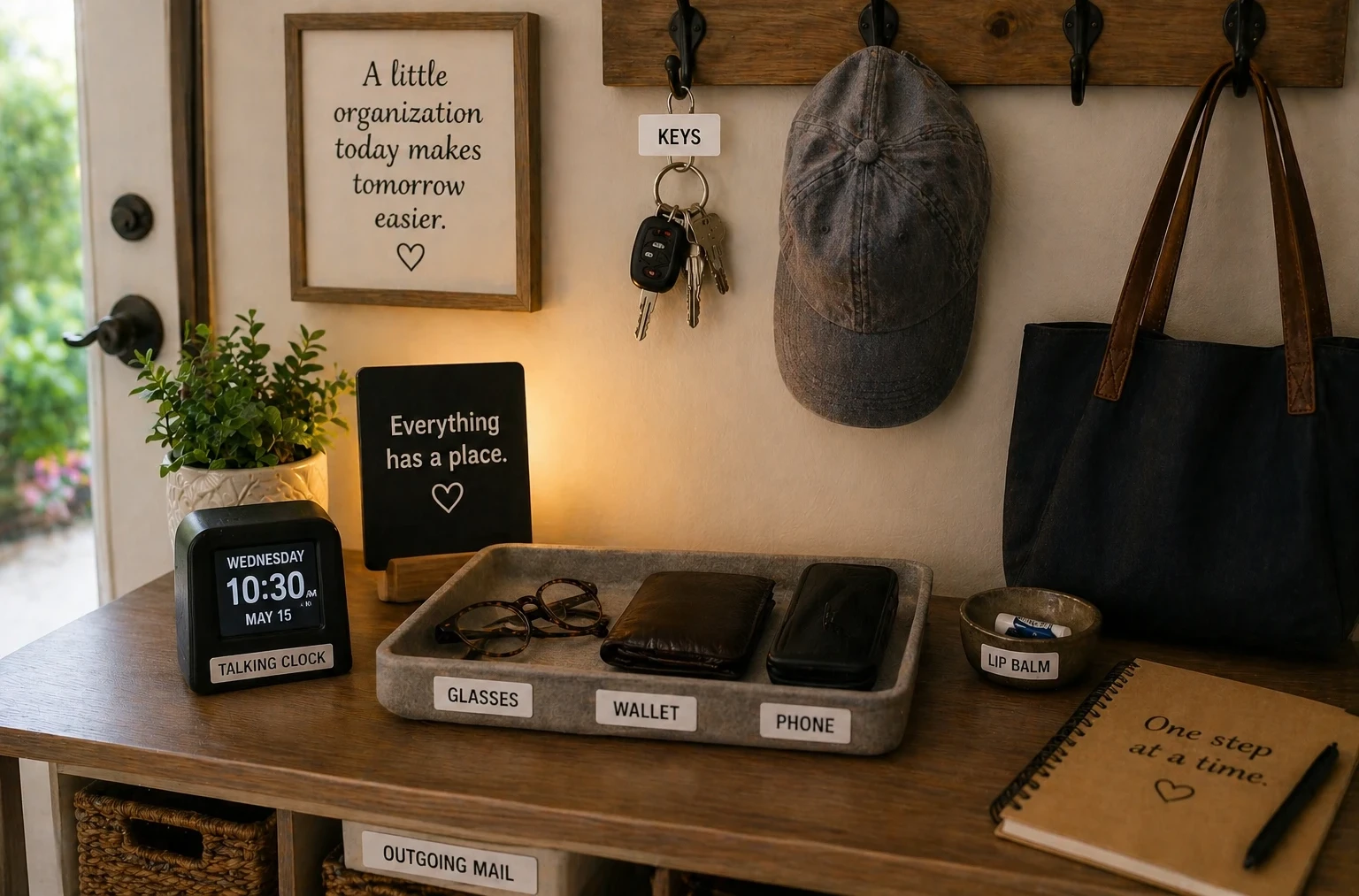 Creating simple, consistent places for everyday items makes it easier to find what you need without searching or second-guessing.
👉 If you want to go deeper into labeling, tactile systems, and organization strategies:
Home Storage Label Ideas: Simple Systems That Actually Work]
🌐 Using This Site Without Getting Overwhelmed
There’s a lot of information here, and it’s easy to feel like you need to learn everything at once. I found it helped to slow down and focus on one area at a time. Saving helpful pages to come back to later also made things feel more manageable.
👉 If you’d prefer a quick overview of how everything is organized, you can visit the Start Here page, which walks you through the main sections.
There’s no need to do everything today. This process works best when you take it one step at a time.
🚦 Where Most People Go Next
Once the basics start to feel a little easier, most people naturally begin exploring the next level of independence. That might include orientation and mobility training, learning how to use a white cane, or becoming more comfortable navigating outside the home.
Others begin exploring accessible technology—using smartphone features like screen readers or magnification tools to stay connected and manage daily tasks. Many also build on their daily living skills by learning new ways to cook, clean, and manage routines more independently.
There’s no set timeline for any of this. I moved forward when things started to feel steadier, and sometimes stepped back when I needed to. Over time, each new skill opened the door to something else.
👉 If you’re ready to explore more structured resources, organizations like the American Foundation for the Blind offer helpful guidance and connections.
🌱 What I’ve Learned
Starting out with vision loss is tough. There’s no way around that. But what I’ve learned is this:
Progress doesn’t come from doing everything—it comes from doing one thing, consistently.
You don’t have to master every tool or fix every challenge right away. What matters is finding one small change that works, and letting that build into something bigger over time.
For me, it started with something as simple as organizing a drawer or using a talking clock. From there, it grew into routines, systems, and eventually a level of independence that felt natural again.
If you’re reading this, you’ve already taken the first step—and that matters more than you might think. You don’t have to figure everything out today. Just start somewhere. I’ll be walking this road with you.