
A Gentle First Step Toward Confidence and Clarity
A low vision diagnosis can feel like the rug has been pulled out from under you. Even when it’s expected—after years of gradually declining eyesight—finding confidence after vision loss can still feel like a sudden jolt.Everything from reading the mail to navigating your kitchen might suddenly seem uncertain. But here’s the truth: while your world has changed, your ability to thrive within it hasn’t disappeared.
This article isn’t a roadmap with all the answers. It’s more like a walking stick—something to lean on as you take those first steps forward. If you’re feeling overwhelmed, unsure, or simply lost in the sea of new information, know that you’re not alone—and you’re not without options.
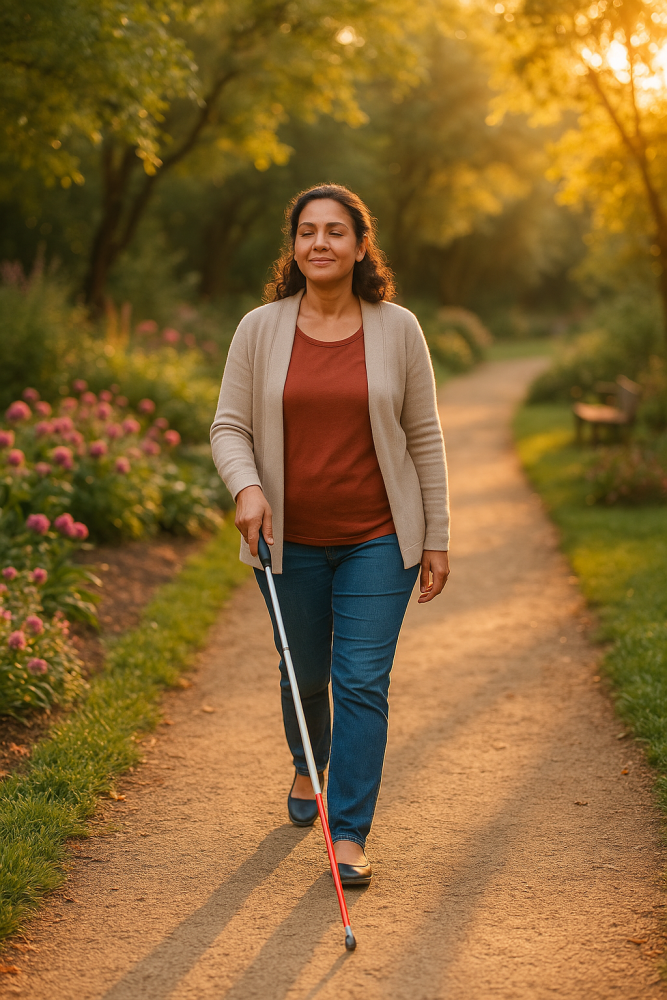 Taking a confident step forward—navigating change with clarity and calm.
🧭 Reclaiming Routine, One Familiar Step at a Time
Daily life doesn’t stop when your vision changes, but how you go about it might need some rethinking. The good news? Many tasks can still be done—just a little differently.
Start with what’s familiar. Instead of trying to overhaul everything at once, focus on tasks you already know well. For example, if you’ve always made coffee each morning, start there. Identify what’s become harder about it (finding the filters, measuring the grounds) and explore small ways to make those steps easier. This might mean:
- Adding high-contrast labels or bump dots to containers and appliances, so you can find what you need by touch.
- Designating specific zones for common items in your kitchen or workspace, reducing the need to search.
- Using consistent containers—like identical spice jars with clear labels—to build tactile memory of where things are.
Stick to a daily rhythm. Even if you’re not back to your full routine, having a few anchors in the day helps. Whether it’s walking the dog, reading a chapter of a book, or making lunch at the same time each day, these small rituals ground you.
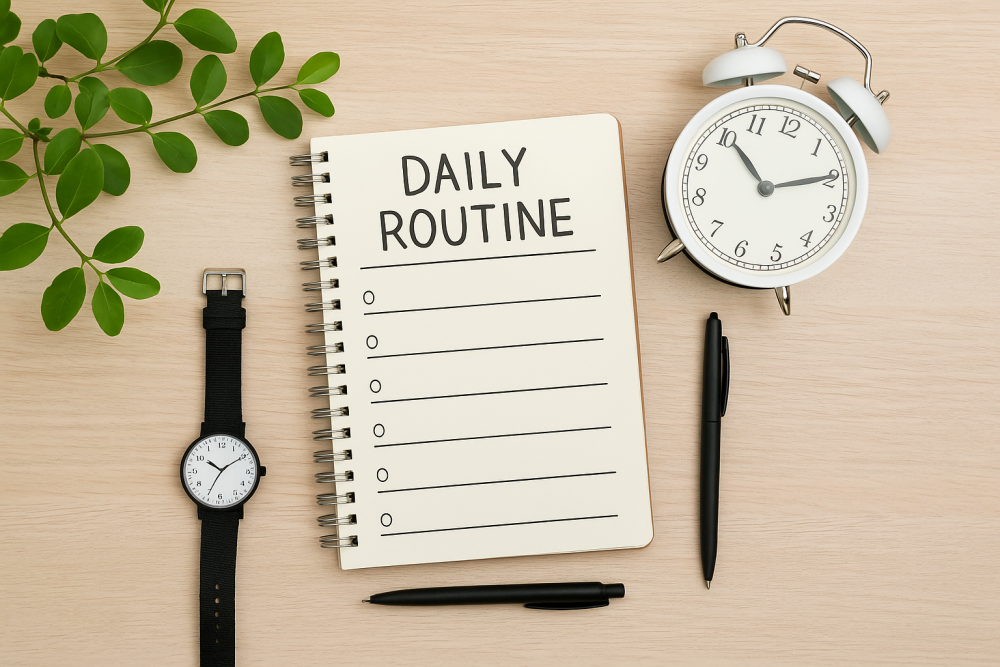 Visual rhythms: Creating a consistent routine helps rebuild confidence and brings a sense of order after a vision loss diagnosis.
🪙 The Tools You Already Have (and Don’t Know It)
Technology and tools can feel overwhelming right after a diagnosis. But chances are, you already own or use something that can help.
Your smartphone is a Swiss Army knife. Before you dive into specialized devices, take a look at the accessibility features already built into your phone. These include:
Magnifier mode, which turns your phone’s camera into a digital magnifying glass.
Voice assistants like Siri, Alexa, or Google Assistant to set reminders, dictate messages, or get information hands-free.
Zoom and contrast settings to make reading screens easier without needing extra equipment.
 A smartphone used in magnifier mode, offering a simple but powerful tool for reading printed text more easily.
Familiar tech can be adjusted. If you’re using a computer, tablet, or TV, try increasing text size, adjusting brightness, or enabling audio descriptions. You might be amazed how a few small changes can make the experience smoother.
🤝 Give Yourself Grace (and a Bit of Structure)
The emotional side of vision loss often doesn’t get enough attention. It’s not just your eyesight that’s changed—it’s your confidence, your pace, and sometimes your identity.
Expect to feel a lot. Grief, frustration, anxiety, and even guilt are common. You may miss the ease you once had or worry about becoming a burden. These feelings aren’t signs of weakness. They’re signs that you’re processing a big life change.
But give those feelings a place.
Talk to someone—a friend, counselor, or support group—who understands.
Write things down. A journal or notebook can help you track what’s improving, what’s frustrating, and what surprises you.
Build small wins into your week. Did you cook a full meal? Navigate a new route? Celebrate it. These are not small.
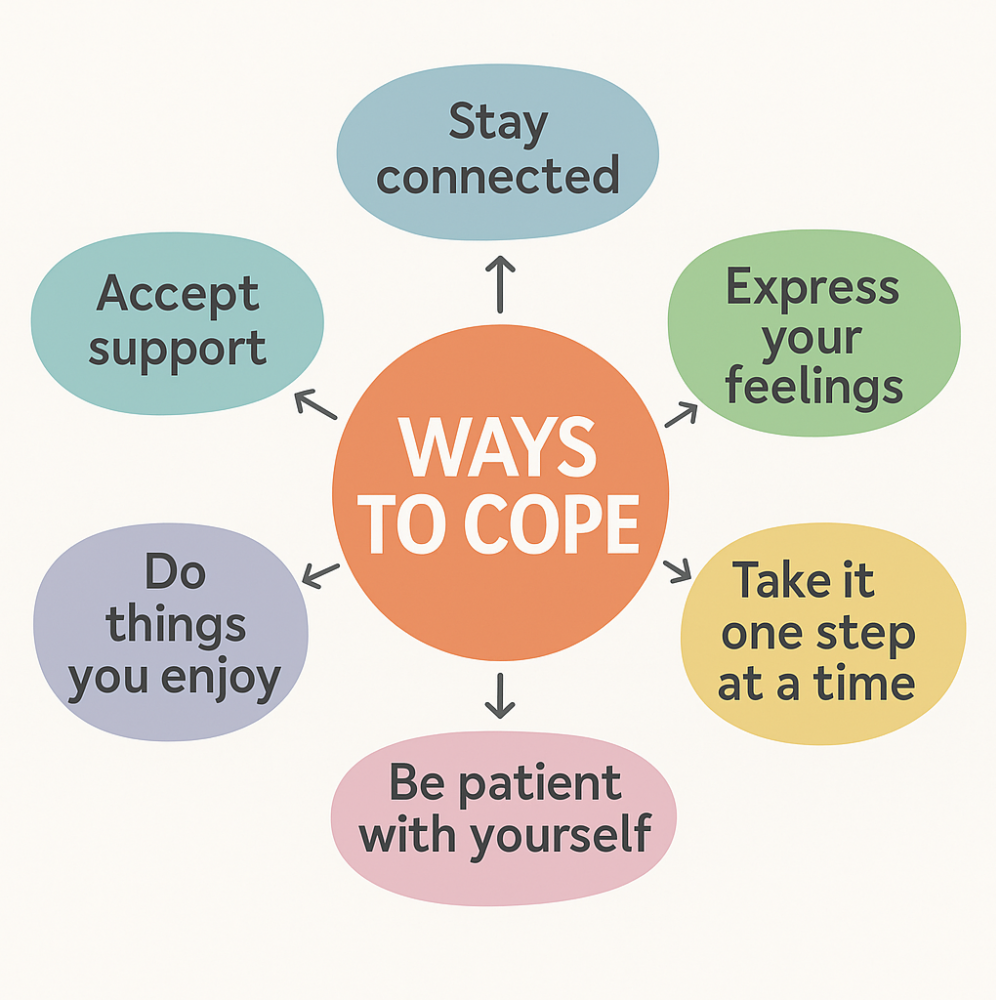 A visual reminder that building confidence is a cycle—each positive step reinforces the next, especially after a vision loss diagnosis.
🧰 Support Systems: You Don’t Have to Figure This Out Alone
Navigating low vision isn’t something you have to do solo. There are organizations, professionals, and communities dedicated to helping people adjust—and thrive.
Start with low vision specialists. These professionals can assess your remaining vision and suggest personalized tools or strategies that actually make a difference.
Reach out to local services. Libraries, community centers, and nonprofits often have resources for people with vision impairments, including:
- Access to assistive devices or trial programs
- Classes and workshops for daily living skills
- Mobility training to help with navigating your neighborhood or using public transportation
Connect with others. Whether online or in person, joining a support group can be eye-opening (pun intended). Hearing how others have adapted can spark ideas—and give you comfort on the tougher days.
 A supportive group setting can offer encouragement, shared experiences, and a sense of community during early vision loss adjustment.
💡 Why This Phase Matters
This moment—right after diagnosis—is full of uncertainty, yes. But it’s also full of opportunity. It’s a chance to re-evaluate how you move through your day, what tools really help, and which routines deserve to be reshaped.
And here’s the truth: many people living with low vision end up building lives that are just as rich and connected as before—sometimes even more so, because they’ve learned to live with greater awareness, intention, and resilience.
 Adapting with Joy: Outdoor activities like kayaking can boost confidence and help restore a sense of freedom and self-worth after vision changes.
✍️ A Few Words Before You Go
Finding your footing after a low vision diagnosis doesn’t mean rushing to feel “okay.” It means giving yourself permission to feel uncertain while slowly figuring out what still works, what needs adjusting, and what possibilities are still ahead.
Start small. Stay curious. Trust that your footing is still there—you just need a moment to find it again.