Why I Tried This Tool
Chopping vegetables is one of those everyday kitchen tasks most of us don’t think much about—until it starts becoming frustrating.
If you’ve ever searched for a good vegetable chopper that actually makes prep easier, you may have questioned whether it would really make a difference or just end up in the back of a drawer.
For me, it was never about whether I could chop vegetables. I’ve always done it myself. But it was slow, sometimes uneven, and required a lot of attention to get things just right.
As my vision changed, I adapted. I used cut-resistant gloves, took my time, and worked carefully.
But consistency became harder—especially for dishes where it really matters.
My husband loves potato salad, and he prefers the potatoes cut into small, even pieces. I told him I’d be happy to make it as often as he wanted… if he would cut the potatoes.
After doing it once, he decided there had to be a better way.
That’s when he bought the Fullstar Vegetable Chopper.
I didn’t think we needed it.
It didn’t take long for me to realize I was wrong.
What This Tool Is (Plain Language)
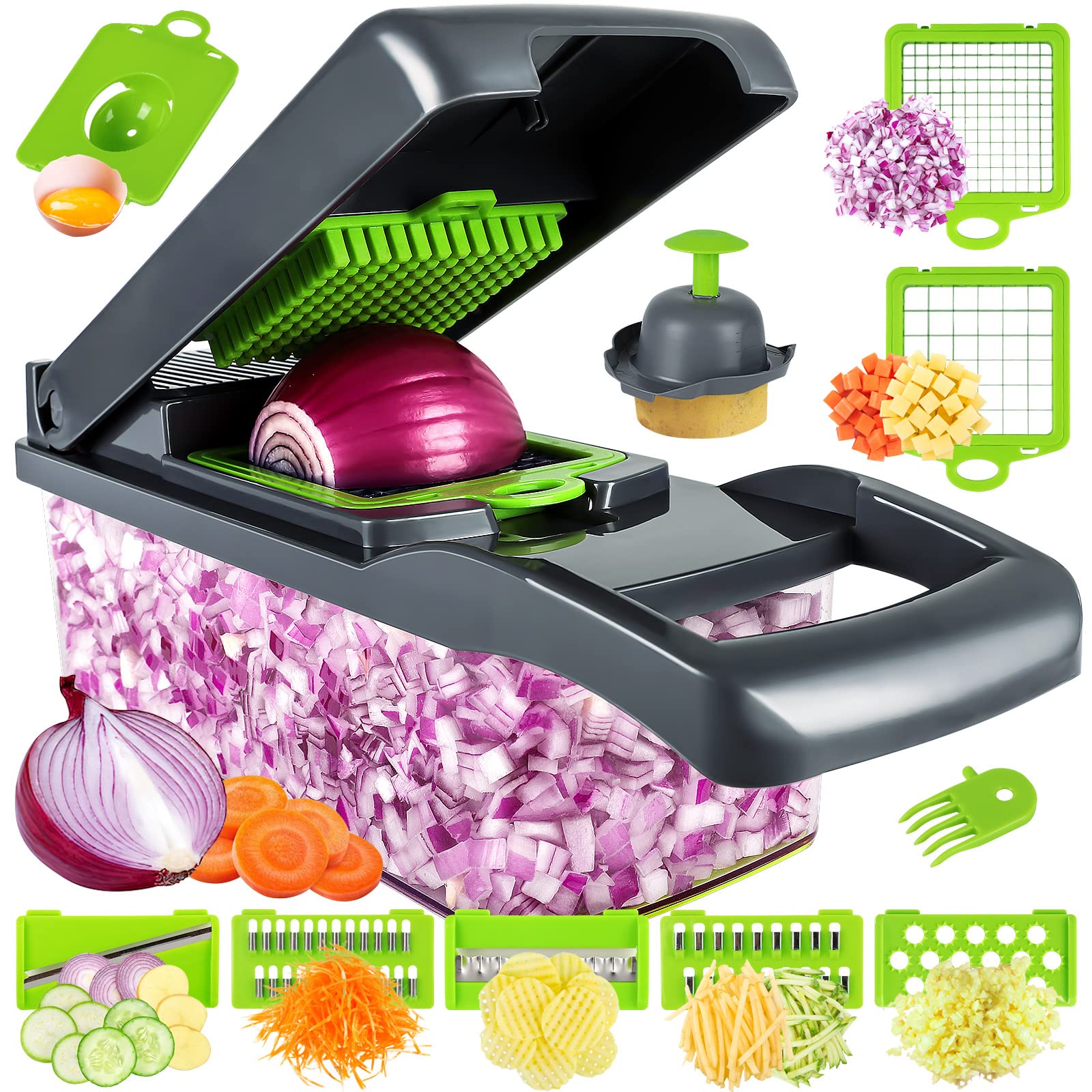
The Fullstar Vegetable Chopper is a manual kitchen tool designed to quickly chop fruits and vegetables into even pieces.
You place the food on a grid of blades, press down the lid, and the chopped pieces fall directly into a container underneath.
In addition to basic chopping, it also includes interchangeable blades for different functions, such as:
- Dicing in different sizes
- Slicing
- And a spiralizer attachment for making vegetable noodles or decorative cuts
There’s no electricity involved and no complicated setup.
It’s simple, straightforward, and designed to make food prep faster and more consistent.
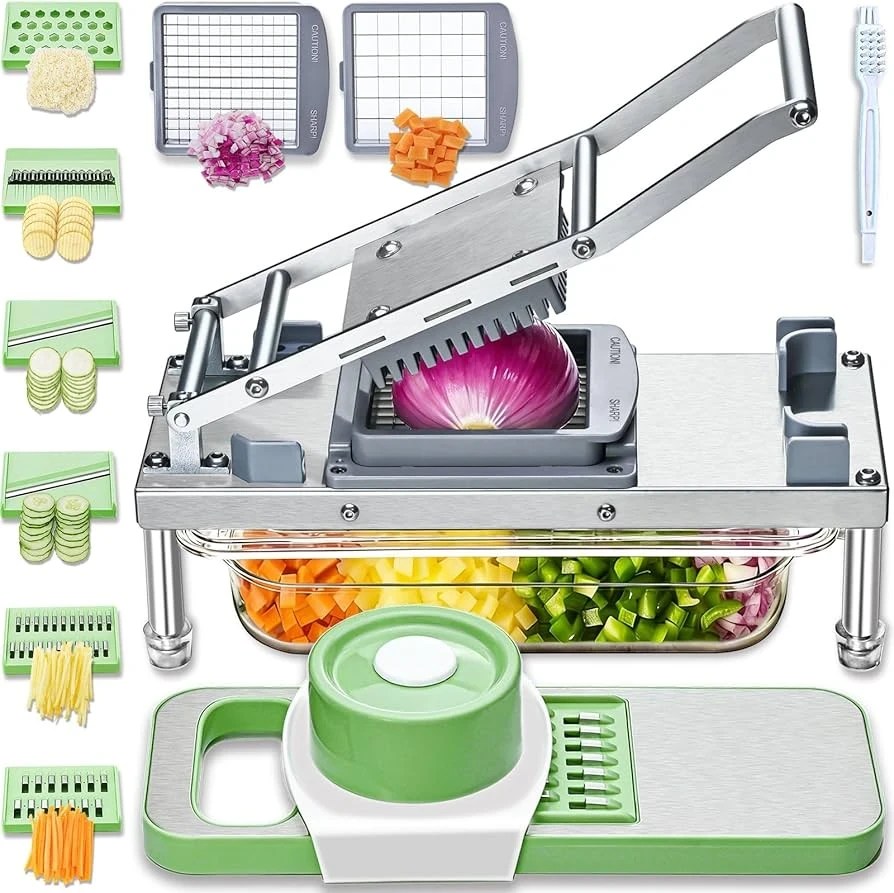 A closer look at how the chopper is designed—simple parts that work together to create consistent results.
How I Use It in Real Life
This has become one of those tools I reach for more often than I expected.
While I mainly use it for chopping, the additional blades—like the spiralizer—offer more flexibility if I want to branch out into different types of food prep.
The process is simple:
- Cut the food down to a size that fits the grid
- Place it on top
- Press down
That’s it.
What used to take several minutes of careful chopping now takes just a few seconds.
I still use a knife for certain tasks, but this has replaced a lot of the repetitive chopping I used to do.
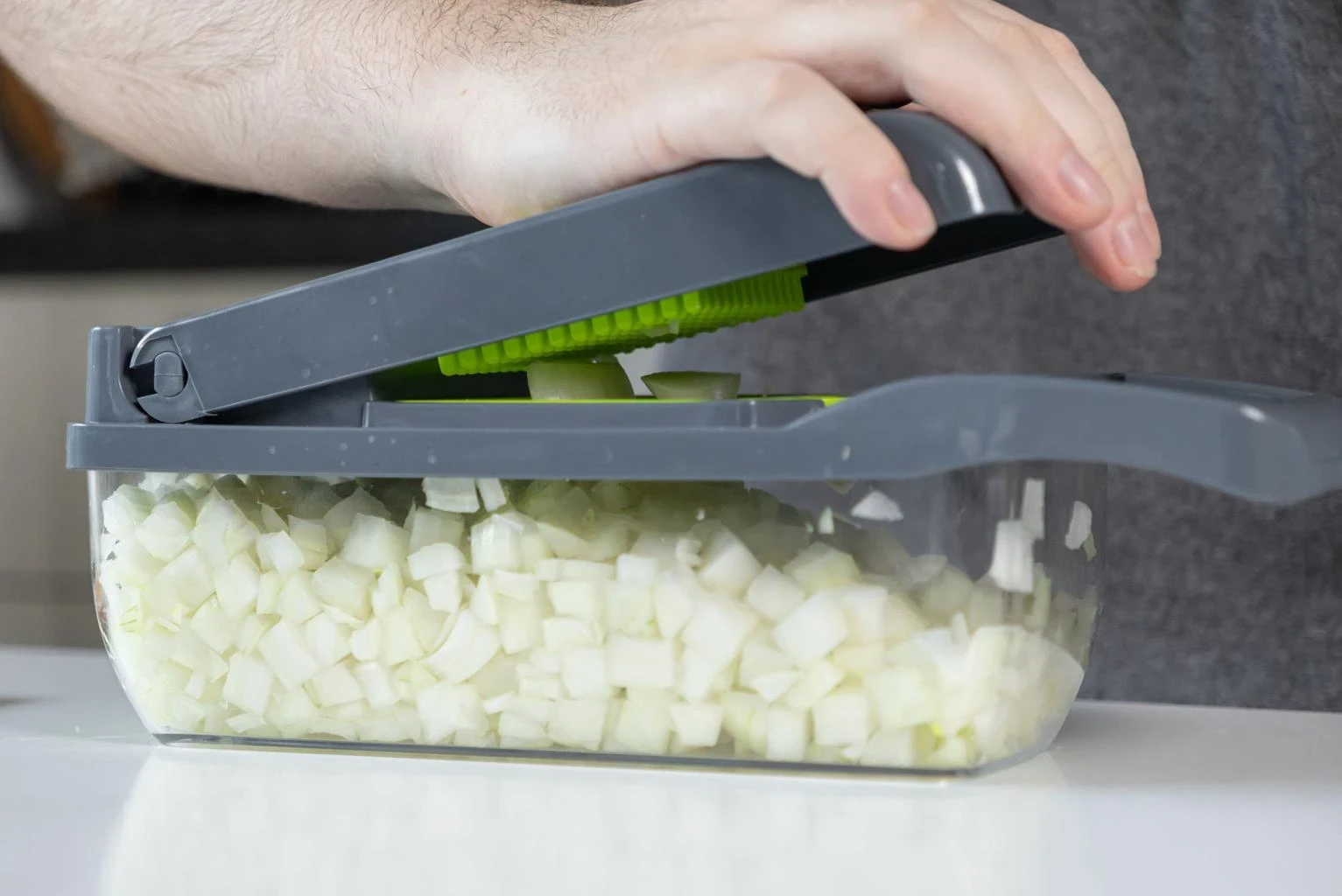 Press down, and the work is done—no careful knife work required.
What Works Well for Low Vision
This is where the chopper really stands out for me.
- Consistent results every time – no need to visually check size or spacing
- Safer hand positioning – hands stay above the blade instead of alongside it
- Reduced reliance on precision – the tool handles the accuracy
- Contained workspace – chopped food goes directly into the container
- Less visual strain – no constant checking or adjusting
For me, the biggest benefit is being able to get even results without relying on my central vision.
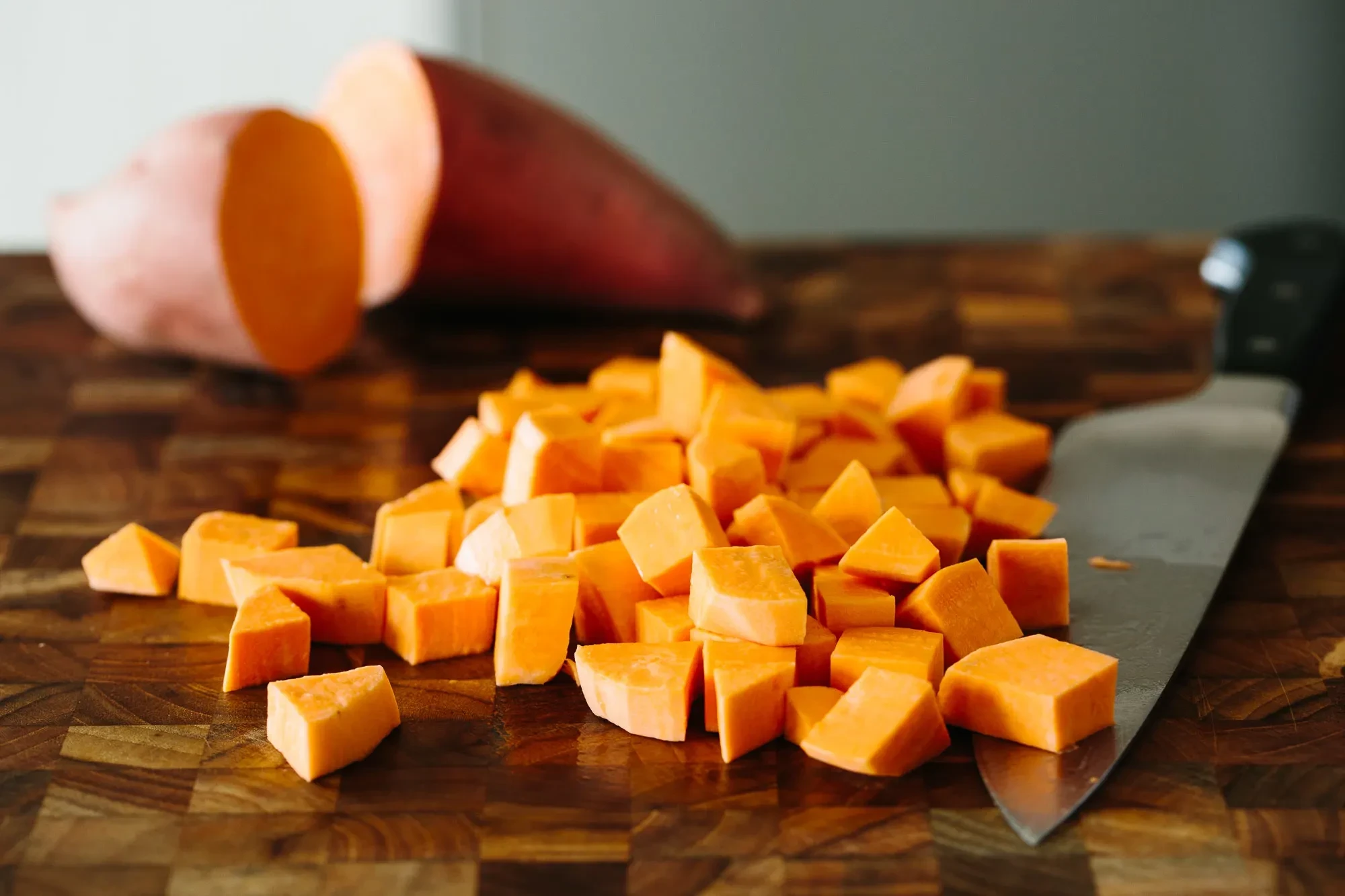 Consistent, even results—without needing to visually check every cut.
Where It Falls Short
- Requires a firm press for harder vegetables like potatoes
- Larger items need to be cut down before using
- Blades are sharp and need care during cleaning
- Not ideal for very small or delicate cuts
It doesn’t replace every cutting task—but it doesn’t need to.
Who I Think This Is Best For
This tool works well for:
- Anyone who wants faster, more consistent food prep
- Home cooks who are tired of uneven chopping
- People who prefer simple, non-electric tools
And especially for:
- Those with low vision or central vision loss
- Anyone who wants to reduce the need for precise cutting
- People looking for a safer, more predictable way to prep food
It may not be the best fit if you prefer full control with a knife or only cook occasionally.
Would I Buy It Again?
Yes.
I didn’t think I needed it—but now that I’ve used it, I wouldn’t want to go back to doing everything by hand.
How This Fits Into My Larger System
This tool fits in naturally with how I already work in the kitchen.
I still rely on:
- Cut-resistant gloves when needed
- Consistent placement of tools and ingredients
- A steady, organized prep routine
But this chopper reduces how much I have to rely on precision and constant visual checking.
It doesn’t replace my system—it supports it.
Where to Find It
You can check it out here:
👉 Fullstar The Original Pro Chopper – Vegetable Chopper and Spiralizer
A Few Words Before You Go
Not every tool is going to be the right fit—and it doesn’t have to be.
Adapting to vision loss is a very personal process. Over time, you figure out what works, what doesn’t, and what makes your day just a little easier.
This is one option that works well for me—but it’s just one of many.
If you’ve found a different approach or tool that works better for you, I’d truly love to hear about it. Sharing ideas is how we all keep learning.