Why Measuring Liquids with Low Vision Became a Challenge
For a long time, measuring liquids was something I did on autopilot. Over time, though, it became one of those kitchen tasks that quietly demanded more attention than it should. If someone was around, I would ask them to measure for me or check how close I had come to what I needed.
Having to ask for help with such a simple task really bothered me.
Eventually, I reached the point where I stopped asking and just did it myself, telling myself, “That’s close enough.” Sometimes it was. Sometimes it wasn’t. And that uncertainty made cooking feel more frustrating than it needed to be.
When you’re measuring liquids with low vision, small details start to matter more than you expect. Thin measurement lines disappear depending on lighting. Clear cups create glare. Even bending down to check the level can feel awkward or unsafe.
What I needed wasn’t a better recipe.
I needed a more reliable way to measure liquids that didn’t depend on seeing perfectly.
What Makes Measuring Liquids with Low Vision Tricky
Most measuring cups are designed with the assumption that you can:
- Clearly see fine measurement markings
- Check liquid levels at eye height
- Tell when you’re just under or just over the line
When vision fluctuates, that system breaks down quickly. Measuring liquids with low vision often turns into guesswork, and guesswork adds tension to cooking.
Over time, I realized the problem wasn’t my technique — it was the visual design of the tools.
My Current Method for Measuring Liquids with Low Vision
Instead of trying to measure the “traditional” way, I changed my process.
Here’s what works for me now:
- I measure liquids on a stable surface, not in midair
- I set measurements before pouring, not after
- I rely on tools that reduce the need for visual confirmation
- I use the same motions every time, so muscle memory takes over
This approach removes pressure. I’m no longer trying to see perfectly — I’m following a system I trust.
A Tool That Made Measuring Liquids Easier
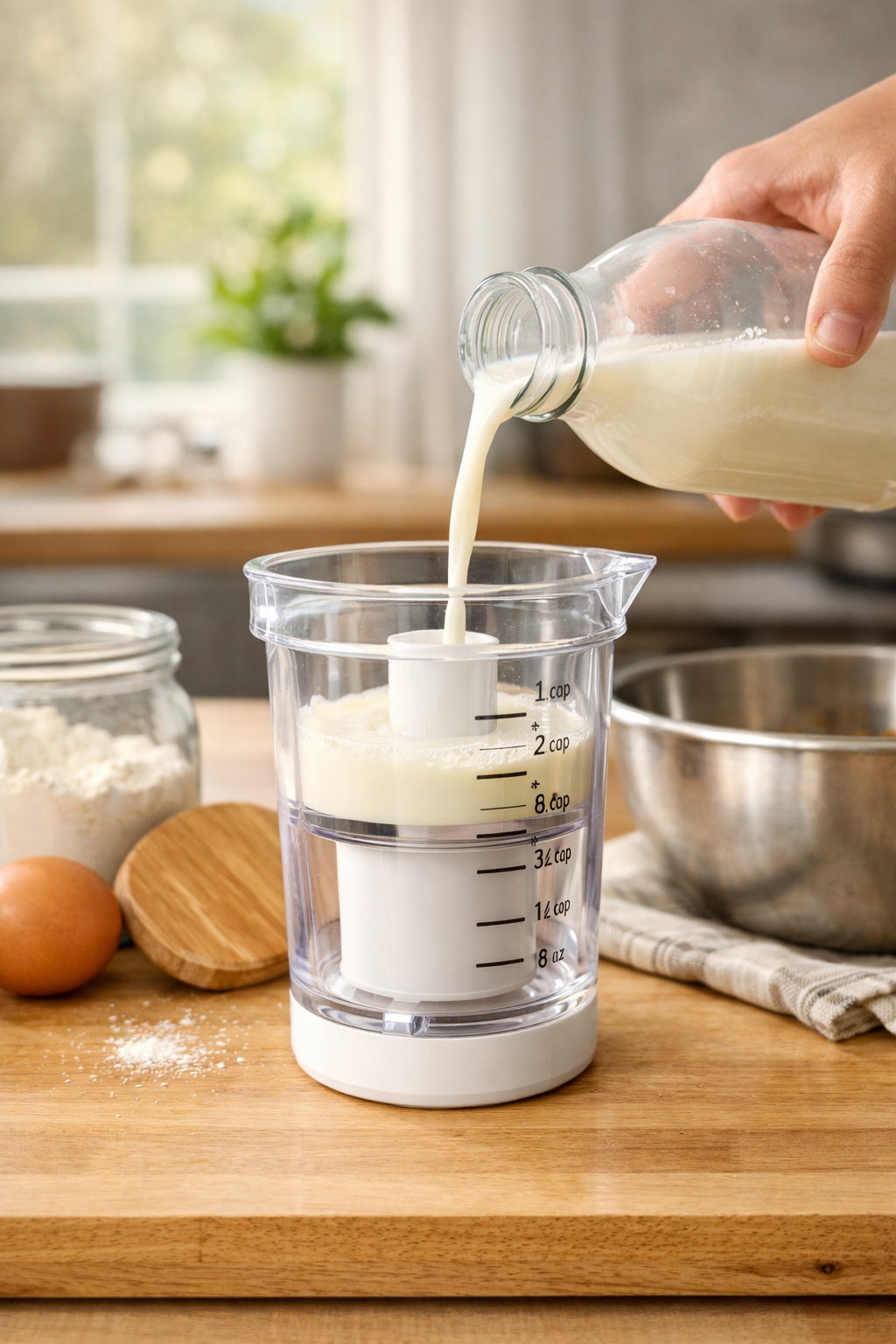
One tool that helped simplify measuring liquids with low vision is an adjustable measuring cup. Instead of watching liquid rise to a thin line, I set the amount first and focus on pouring steadily.
I’ve written a full review here:
👉 4-in-1 Adjustable Measuring Cup Review
The cup didn’t replace every measuring tool in my kitchen, but it replaced uncertainty — and that made a noticeable difference.
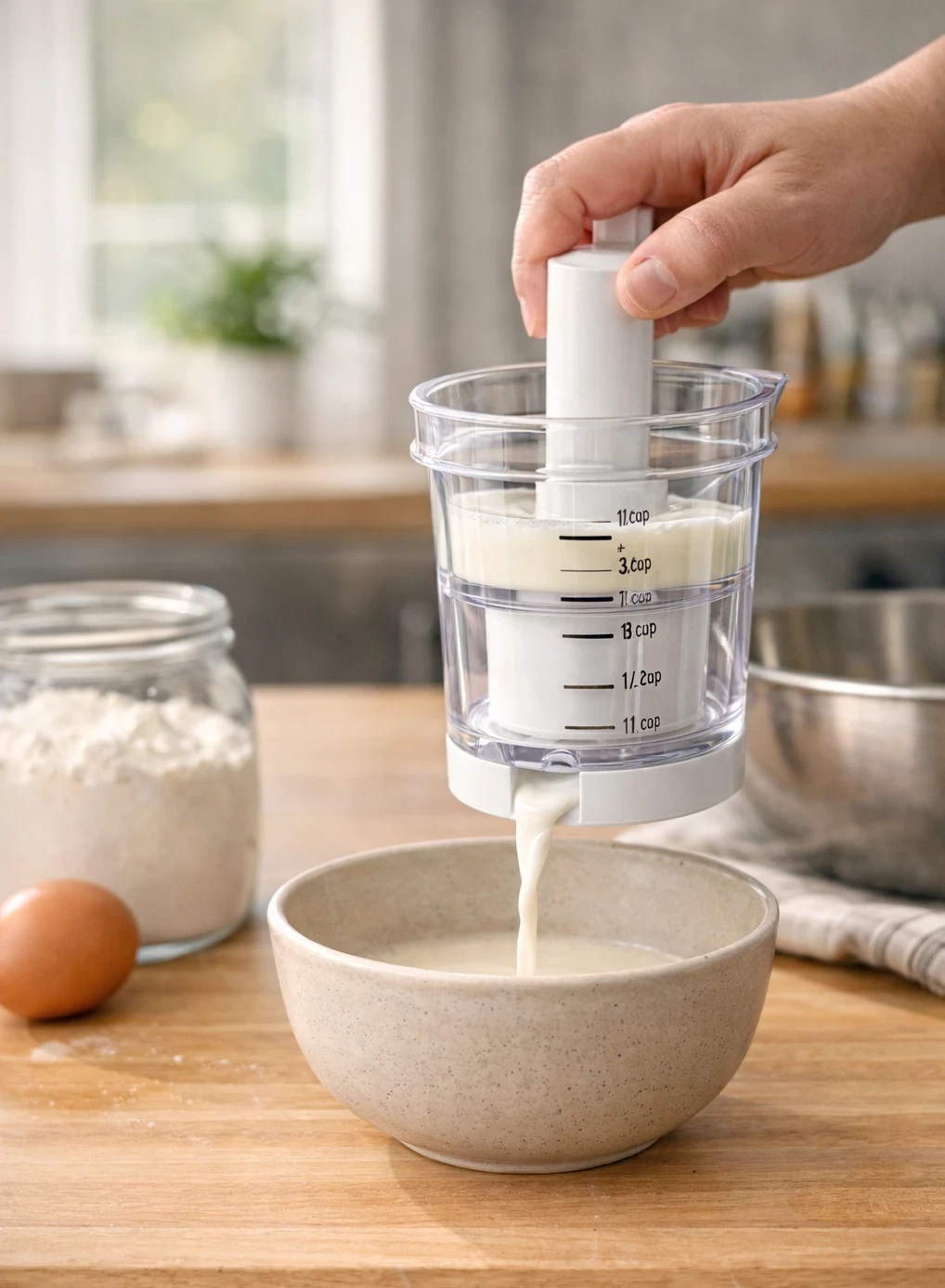 Setting the measurement before pouring reduces the need for visual checking
Why This Method Works for Me
This system helps because it:
- Reduces second-guessing
- Minimizes spills
- Keeps my attention on the task, not the measurement
- Works even when lighting changes throughout the day
Most importantly, it lets me trust the result when measuring liquids with low vision.
Small Habits That Support Better Measuring
A few additional habits make this method even more reliable:
- Using bowls or pans that contrast with the liquid
- Measuring liquids early, before multitasking
- Keeping measuring tools in consistent locations
None of these changes are complicated, but together they make cooking feel calmer.
What I’ve Learned Over Time
I don’t measure liquids faster than I used to — I measure them with less stress.
When measuring liquids with low vision stops being a guessing game, cooking becomes more enjoyable again. I’m not compensating or correcting as much. I’m simply moving through the steps with confidence.
A Few Words Before You Go
Measuring liquids with low vision isn’t about perfect technique. It’s about choosing systems that support you on days when vision is less cooperative.
Once I stopped trying to measure the way the tools expected me to, everything became easier. And that shift — from forcing precision to building trust — is what made the biggest difference in my kitchen.