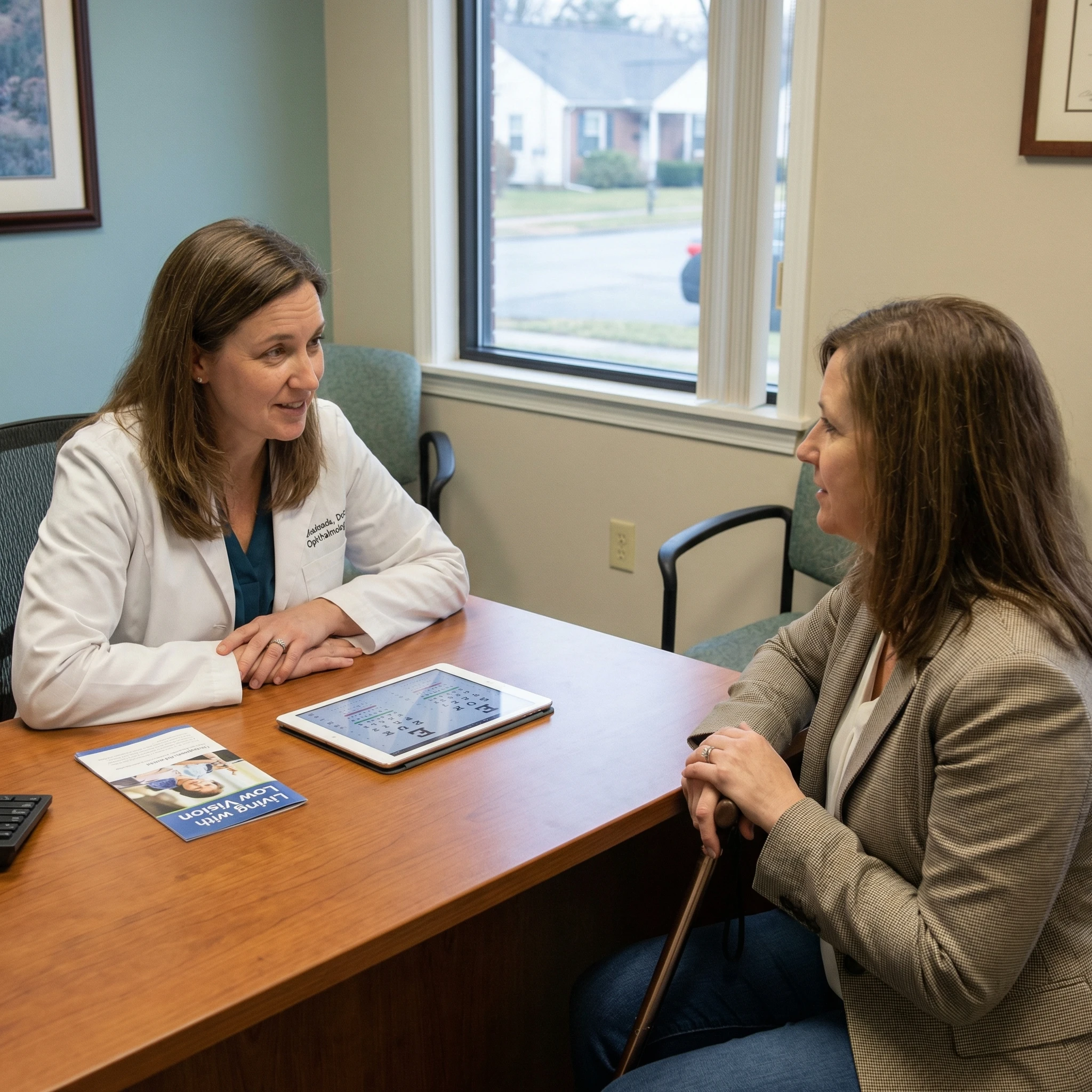
If you’re new to vision loss, things can feel overwhelming at first. Everyday tasks like making coffee or finding your keys may suddenly turn into hours of frustration. I’ve felt the confusion as small changes piled up, and it’s more than just learning to get by. It’s about finding ways to make life work again, step by step.
🔍 What Starting Really Means When You’re New to Vision Loss
Losing vision, whether slowly or suddenly, brings a big switch up. For me, those early days were a mix of denial, curiosity, and a deep need to figure out how to keep living life. This stage isn’t about having every solution nailed down; it’s about allowing yourself to learn, to make mistakes, and to adapt as you go. Trying new tools, asking for advice, and accepting help are all part of the adventure. I found it incredibly helpful to treat every small win (like pouring a glass of water without spills) as a sign that I was able to adapt, even when everything felt tough.
🏠 Goal One: Make Your Home Easier to Navigate
My first challenge wasn’t just avoiding obstacles—it was knowing what I had and being able to find it without frustration.
When everything starts to look the same, even simple tasks can slow you down. I found that a few small changes made everyday routines much easier:
Clear, Consistent Placement
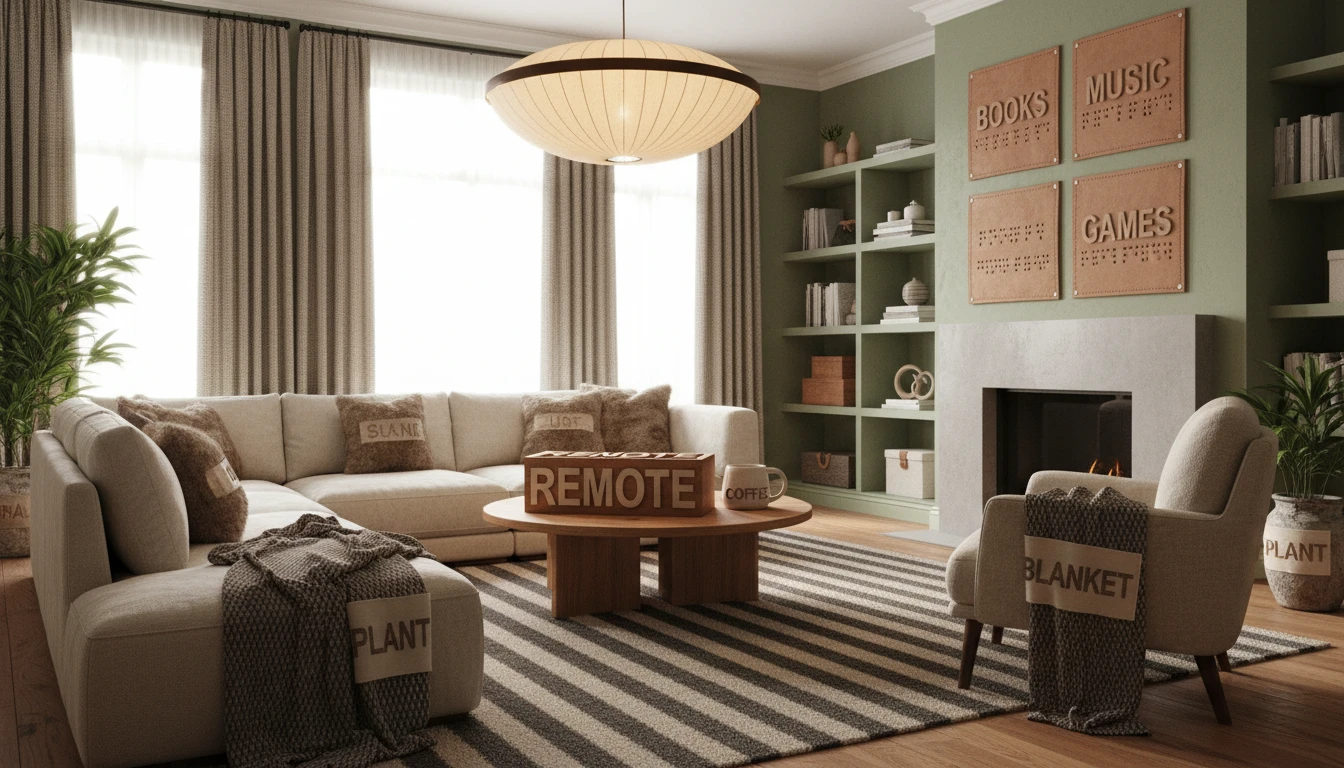
I started keeping things in the same place every time. When items have a “home,” you don’t have to search for them—you just go straight to them.
Reducing Visual Clutter
Too many items in one space made it harder to tell things apart. Simplifying what I kept out—and grouping similar items together—made a big difference.
Simple Visual and Tactile Cues
Using contrast, labels, or touch markers helped me quickly identify what I was looking for without second-guessing.
Better Access to Everyday Items
I made sure the things I use most were easy to reach and not buried behind other items.
👉 At this point, most of us are simply looking for some basic direction for handling everyday life. Maybe it’s organizing the house, making things safer, or just finding ways to make daily routines run more smoothly.
If you’d like a simple place to start, I walk through my approach here:
👉 Home Organization Tips That Make Everyday Life Easier
⚠️ Goal Two: Lower the Risk of Getting Hurt
Safety grows way more important when you can’t spot hazards as you used to. I realized quickly that I had to be extra cautious about sharp corners, wet floors, and half-open doors. Here’s what I did:
- NonSlip Mats: In bathrooms and kitchens, these help stop falls.
- Cover Sharp Edges: Foam guards on table corners have saved me from countless bumps.
- Handles and Rails: Installing grab bars in the shower or by stairs made me feel much more confident walking around.
- Always Close Cabinets: Making a habit of shutting cabinet doors keeps surprises at bay.
Being proactive helped prevent accidents. If I was unsure about a space, I’d ask a friend or family member to walk with me to spot risks I might miss. VisionAware has more practical tips for preventing falls that I still use today.
👉 From here, readers often move toward kitchen safety techniques, protective tools, and habits that reduce burns, spills, and falls. As confidence grows, everyday tasks begin to feel far less intimidating.
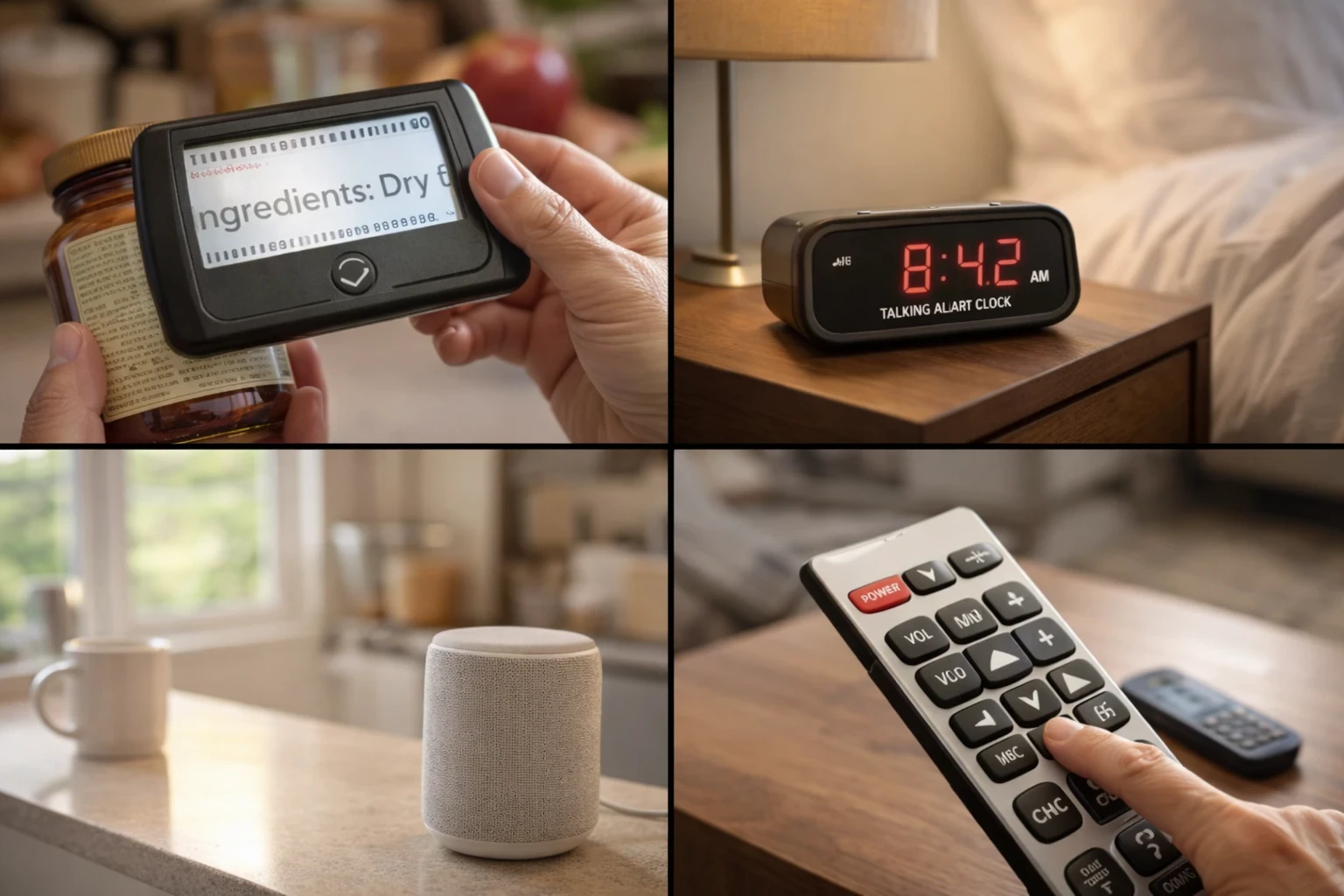 Learning one helpful tool at a time can make everyday routines feel manageable again.
🧰 Goal Three: Learn One Helpful Tool at a Time
Learning a ton of new gadgets all at once left me feeling scattered. I focused on trying out just one tool to begin with. The talking clock was a game-changer for my daily routine. Hearing the time helped me stay on schedule and made using other talking gadgets less intimidating. You might want to start with one of these:
- Large-Button or High-Contrast Devices: Simple changes like an easy-to-see remote or telephone can remove frustration quickly and make everyday tasks feel manageable again.
- Magnifiers: If you have some usable vision, a pocket magnifier helps with small print or labels.
- Voice Assistants: Smart devices like Alexa or Google Home can set reminders, play music, or help with recipes handsfree.
Testing out one tool, then another, lets me see what fits naturally into my days. There’s no rush. As my needs changed, I added more where it made sense for me.
👉From here, many beginners start exploring magnifiers, voice features, or small adaptive tools that make reading, cooking, and communication easier. The key is choosing just one place to begin and building confidence step by step.
🔑 Goal Four: Build Easy Systems to Find Your Stuff
One of the biggest daily frustrations? Misplacing things. Without the ability to scan a room, hunting for keys, remotes, or glasses felt hopeless. Over time, I built routines that helped tons:
- “Everything Has a Place” Rule: My phone and wallet go in their spot every night, no exceptions.
- Use Trays and Baskets: Catchall trays by the main door and baskets in drawers help keep track of small things.
- Tactile Markers: Bumpy stickers let me feel for appliance buttons or tell similar bottles apart easily.
- Checklists: I use a simple daily checklist (sometimes with a smart speaker) to remind myself where things should be put back.
At first, it felt odd to stick to strict routines, but once the habits were in place, my everyday stress dropped a ton. Over time, it meant a lot less wasted energy and a lot more independence.
👉 At this point, many readers start building even more daily living skills — exploring new labeling methods, color strategies, and simple ways to make everyday items instantly recognizable. These habits grow over time, and each improvement makes the day run a little smoother. As routines settle into place, life often becomes manageable enough to finally notice the emotional side of the journey that’s been waiting underneath.
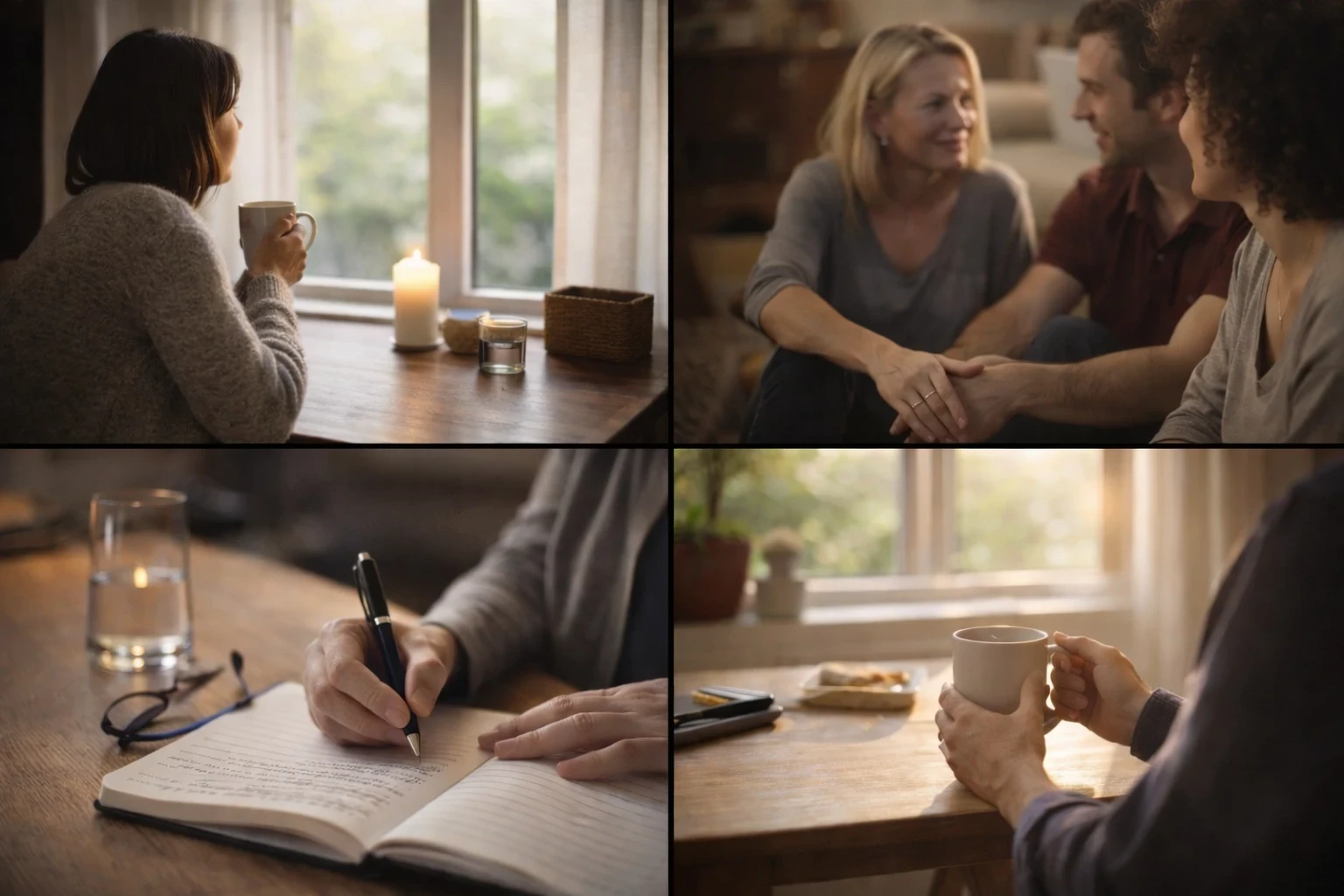 Taking time to reflect, talk, and process emotions is just as important as learning new skills.
💬 The Emotional Side No One Warns You About
After tackling safety and finding my stuff, emotions really kicked in. Losing vision brought waves of anxiety and sadness that would come and go, sometimes just from small everyday struggles. I found it helped to:
Talk About It: Sharing feelings with friends, family, or a support group, both online and face-to-face, lightened the burden.
Let Myself Grieve: I gave myself space to mourn things that had changed. It’s natural to miss the old routines.
Celebrate Wins: Every success, even as tiny as making tea on my own, reminded me I was making progress.
Get Professional Support: Speaking with a counselor or therapist put words to feelings I didn’t even realize I had.
👉 Learning practical daily living skills is an important and necessary step. But the emotional upheaval that comes with vision loss is powerful, and it deserves attention right from the beginning. Developing emotional wellness is imperative. Finding ways to cope, talk things through, and connect with supportive resources is just as vital as mastering the routines of everyday life. There are resources available locally, on a state leveral, and natinally.
🌐 How to Use This Site Without Getting Overwhelmed
It can be easy to get lost and try to read everything all at once. I learned to slow down:
- Pick One Section: Focus on the topic that matters today and dig into that before moving on.
- Bookmark Favorites: Save helpful pages so you can come back later. No need to memorize everything right away.
- Ask Your Questions: Leave questions in forums or drop a comment. Most folks in these spaces are eager to help out.
Everyone’s adventure living with vision loss is unique. Going at your speed and only choosing what’s helpful right now helps make things manageable, not overwhelming. There is no “one size fits all” approach here.
👉 Most readers return again and again, tackling one challenge at a time. Little by little, those small solutions build a life that feels familiar and workable again.
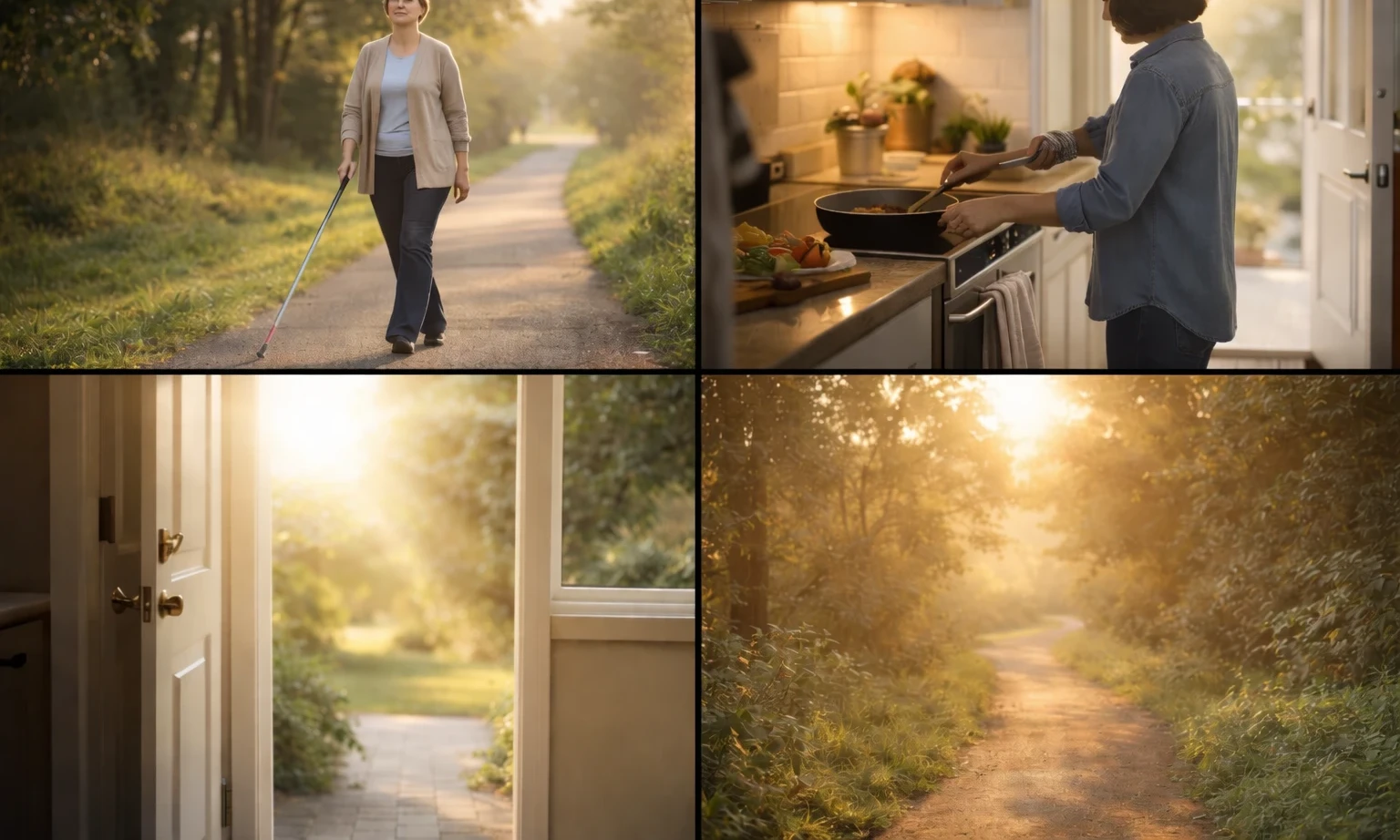 Independence grows step by step, often in small everyday moments that slowly open the path forward.
🚦 Where Most People Go After Covering the Basics
Once the basics feel a bit less stressful, most people I’ve met take one of these next steps:
- Orientation and Mobility Training: Learning safe new walking routes and how to use a white cane outdoors brings freedom.
- Tech for Accessibility: Trying smartphone features like screen readers or magnifiers for texting and staying connected.
- Daily Living Skills: Building on easy wins by learning to cook, clean, or manage home tasks (lots of places do classes and rehab training).
- Reaching Out for Support: Meeting mentors, joining community groups, or finding online spaces to share what works and what doesn’t.
There’s no set timeline or perfect checklist to follow. I moved ahead when things started to feel steadier, and sometimes took a step back if needed. As new skills and people entered my life, I realized how much more was possible. If you want more details, the American Foundation for the Blind offers loads of guides and connection points for every phase.
Starting out with vision loss is tough, but every small goal brings you closer to making life work for you again. If you’re reading this, you’re already on the way.
👉 You don’t have to figure everything out today. Start with one change, one room, one routine. Progress builds faster than you think, and before long you’ll be doing things that once felt impossible. I’m glad you found your way here, and I’ll be walking this road with you.