Why I Looked Into This Tool
Personal grooming can be surprisingly frustrating when you live with low vision. Tasks that once took seconds—like spotting and removing a stray eyebrow hair—can suddenly become difficult or even uncomfortable. Tiny grooming tools require precision, and if you can’t clearly see what you’re doing, it’s easy to miss the hair or pinch your skin.
That’s why the design of the tool matters so much. Grip, control, and tip alignment can make a big difference in how easy or difficult grooming tasks feel.
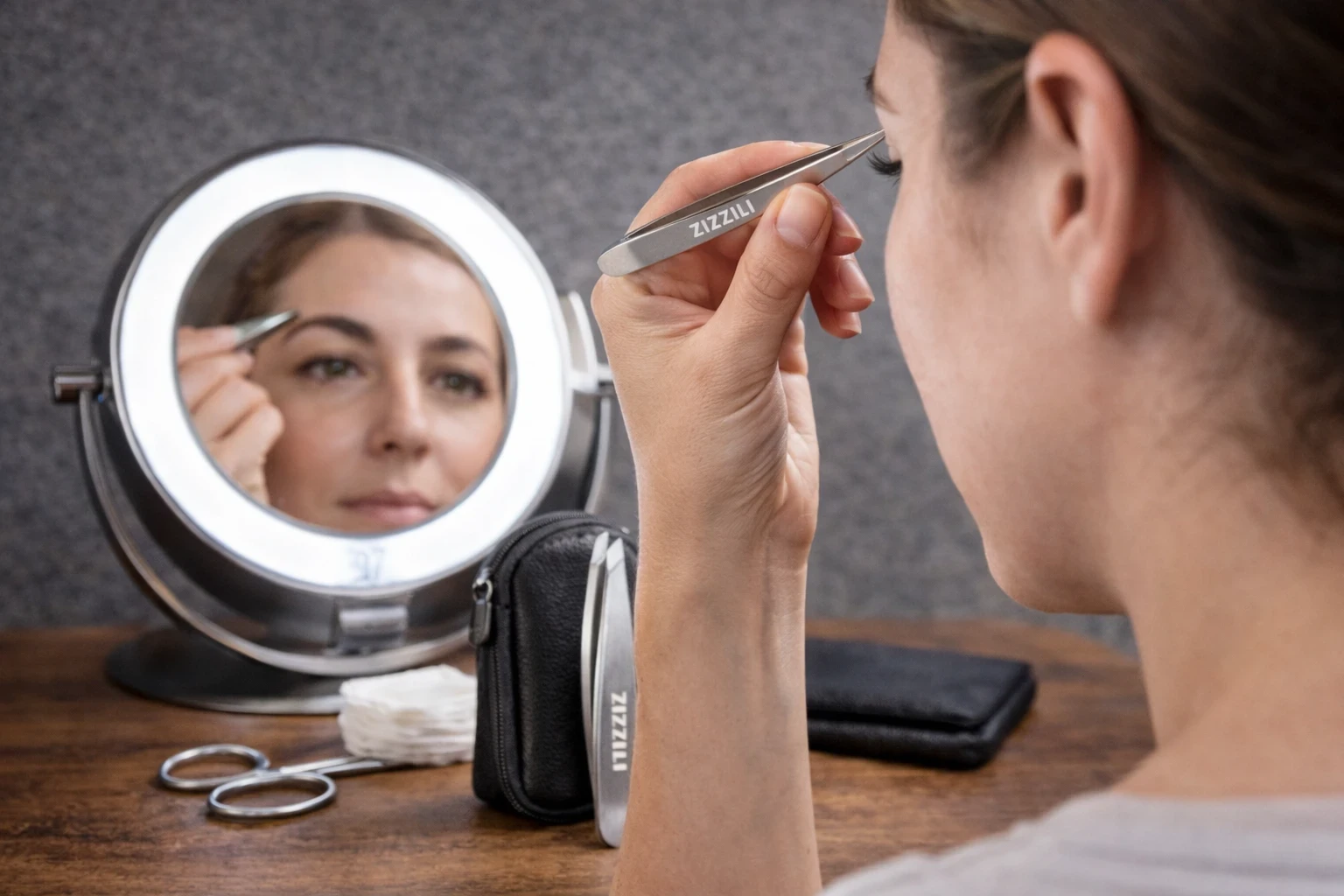
While researching personal care tools that might work better for people adapting to vision loss, I came across the Zizzili Basics Slant Tip Tweezers. With thousands of positive reviews and a surgical-grade stainless-steel design, they seemed like a good example of precision tweezers for low vision grooming tasks.
Even though I haven’t personally used this specific model, the design and strong customer feedback make it worth evaluating to see whether it could be a useful addition to a low-vision grooming setup.
What This Tool Is (Plain Language)
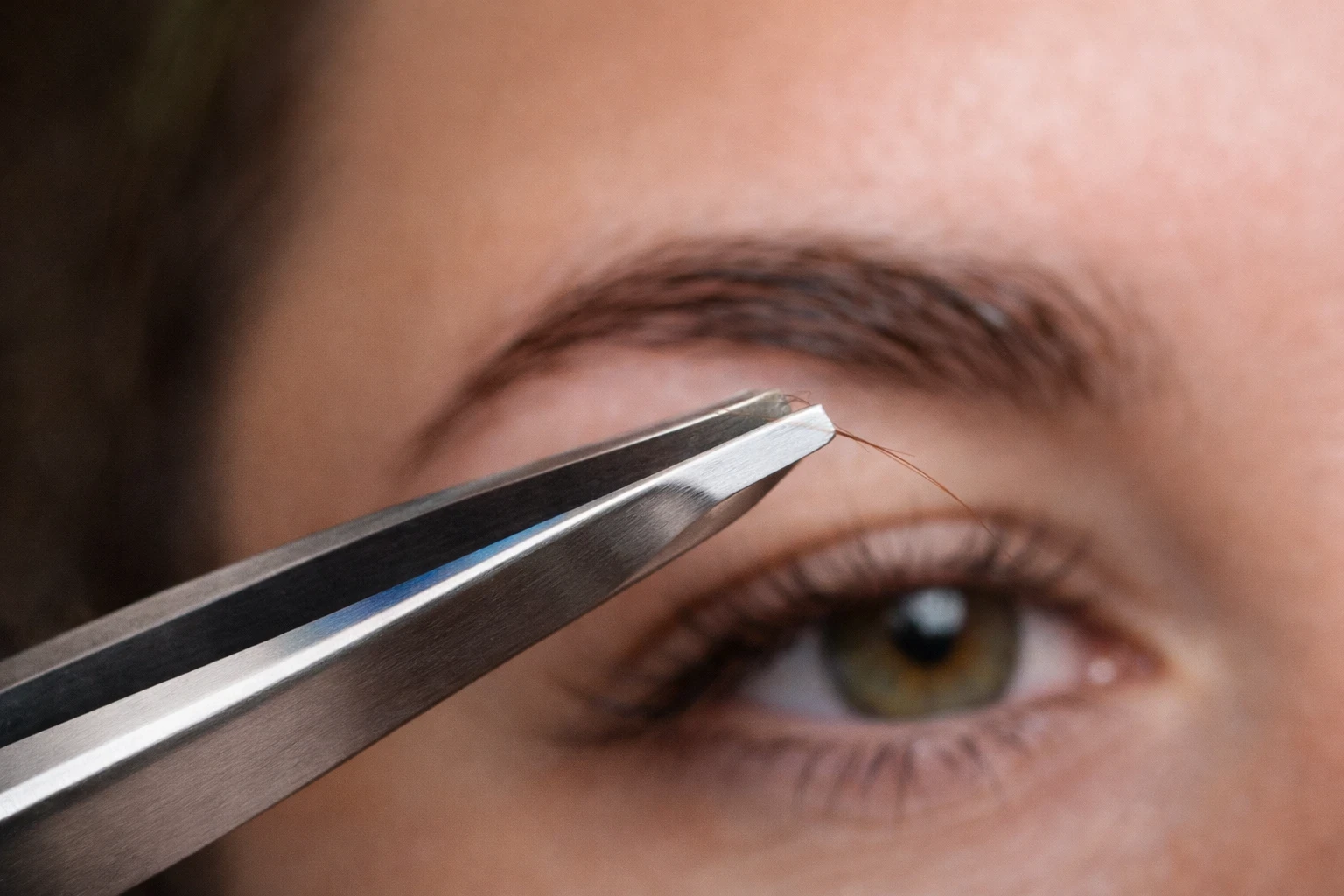
The Zizzili Basics Tweezers are slant-tip tweezers designed for eyebrow shaping and facial hair removal.
They are made from surgical-grade stainless steel, which helps maintain precise alignment over time. The slanted tip allows the tweezers to grip hairs at an angle, which can make it easier to grab individual hairs without perfect positioning.
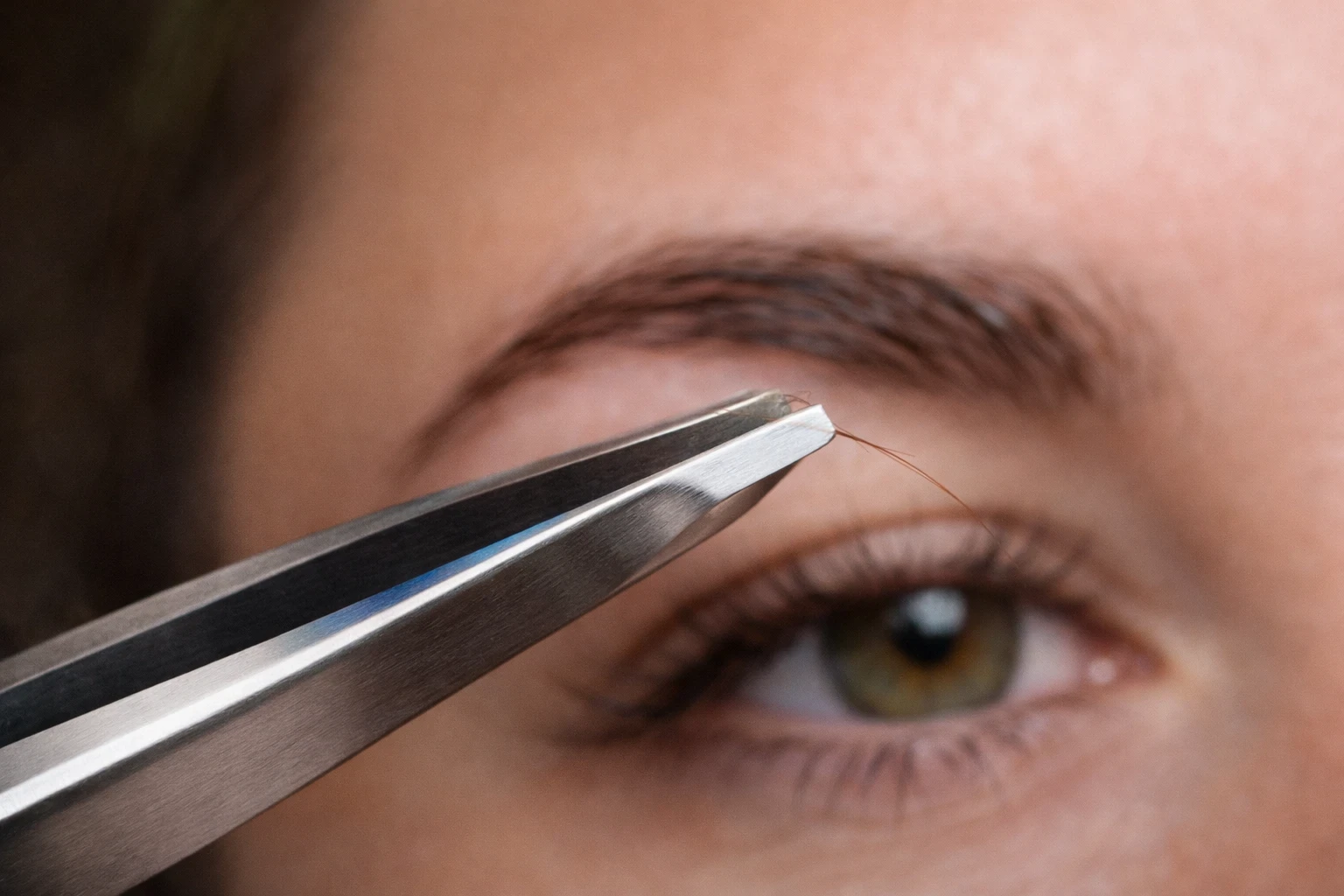
The tweezers also come with a protective storage pouch, which helps keep the tips from bending or becoming misaligned when stored in a drawer or travel bag.
The goal of the design is simple:
grab the hair cleanly and remove it in one attempt rather than repeated tries.
How This Tool Might Fit Into a Daily Routine
Most people don’t use tweezers every day, but when you need them, you want them to work quickly and reliably.
Typical uses include:
- Removing stray eyebrow hairs
- Plucking occasional facial hairs
- Removing small splinters
- Minor grooming touch-ups
For someone with low vision, tweezers usually work best when used with:
- a lighted magnifying mirror
- good bathroom lighting
- a tool that provides good grip and control
A well-aligned pair of tweezers can reduce the number of attempts needed to grab a hair, which makes grooming quicker and less frustrating.
What Makes Precision Tweezers Helpful for Low Vision
Several features of these tweezers may make them helpful for grooming tasks when vision is limited.
• Precision slant tip
A slanted edge can grip hairs from the side rather than requiring perfect vertical alignment.
• Strong grip on fine hairs
Well-aligned tips reduce the need to repeatedly grab the same hair.
• Durable stainless-steel construction
High-quality metal tools typically hold their alignment longer than cheaper stamped tweezers.
• Simple, straightforward design
No complicated mechanisms or parts that could fail.
• Protective pouch for storage
Helps prevent damage to the tips, which is critical for maintaining precision.
For grooming tools, the most important factor is often tip alignment, and this is the feature most frequently praised in reviews of this model.
Where It May Fall Short
Even a well-reviewed tool has some limitations.
Possible drawbacks include:
• Small tool size
Tweezers are naturally small, which can make them harder to handle for people with limited dexterity.
• Lighting is still necessary
Without strong lighting or magnification, finding the hair may still be difficult.
• No built-in lighting
Some grooming tools include lights or magnification, but these do not.
• May not help with severe vision loss
If someone cannot visually locate the hair even with magnification, tweezers alone may not solve the problem.
In other words, the tool itself may work well, but it often needs to be part of a larger grooming system.
Who I Think This Is Best For
Based on the design and user feedback, these tweezers may be a good choice for:
- People with mild to moderate low vision
- Anyone who uses a lighted magnifying mirror
- People who want a durable, well-aligned grooming tool
- Anyone looking for precision tweezers for low vision grooming tasks
They may be less helpful for someone who cannot visually identify hairs even with magnification.
Would I Buy It?
Probably. I would pair it with really good lighting and a magnifying mirror (or a lighted magnifying mirror)
The strong reviews and simple stainless-steel construction suggest this is a reliable precision grooming tool. For someone building a small personal-care kit designed to make grooming easier with low vision, it could be a useful addition.
However, I would likely pair it with good lighting or a magnifying mirror to make grooming tasks easier.
How This Fits Into My Larger Grooming Setup
When adapting to vision loss, it helps to think of tools as part of a system rather than individual solutions.
A simple grooming setup might include:
- A lighted magnifying mirror
- Good bathroom lighting
- Precision tweezers
- Electric nail clippers
- A consistent storage spot so tools are easy to locate
Tweezers like these fill the role of precision grooming tools for small tasks.
Where to Find It
The Zizzili Basics Slant Tip Tweezers are widely available online.
You can check current pricing and reviews here:
Zizzili Basics Tweezers – Surgical Grade Stainless Steel Slant Tip
Available on Amazon
 A Few Words Before You Go
When vision changes, even simple grooming tasks can require new strategies and better tools. Sometimes the solution isn’t a specialized accessibility device, but simply a well-designed tool that works reliably every time.
Precision tweezers fall into that category. They won’t solve every grooming challenge, but when combined with good lighting and magnification, they can make small personal care tasks easier to manage.
And sometimes it’s those small daily victories that help maintain independence.