

Uncrimping the Mystery: A Simple Kitchen Tool That Matters More Than You Think- The Best Can Openers For Low Vision
It’s funny how something as small as a can opener can turn into a daily source of frustration—or freedom. If you’re cooking with low vision, even a basic task like opening a can can feel like wrestling a metal puzzle. I’ve been there. And after trying nearly every type of opener out there, I’ve learned one thing: a good can opener isn’t just about convenience—it’s about safety, cleanliness, and confidence.
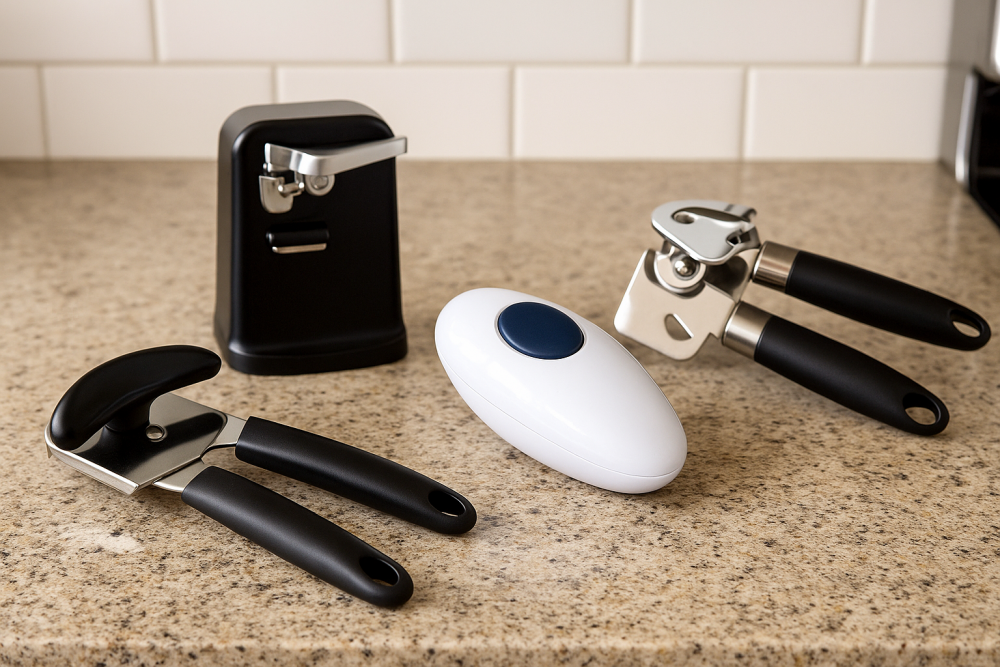 Exploring options: Manual, electric, and battery-powered can openers each offer different benefits for low vision cooks.
⚙️ Manual Can Openers: Old-School Reliability (With a Catch)
We’ve all used them—those handheld, twist-style openers that clamp onto the top of a can. They’ve been around forever, and while they work, they’re not always the easiest or safest option.
There’s something reassuring about a tool that needs no batteries and no instructions. They’re inexpensive and always available, which makes them a go-to in many kitchens. But for those of us with low vision or reduced grip strength, the struggle is real.
Lining up the blade just right can feel like trying to thread a needle in the dark. I’ve lost count of how many times I thought I had it—and ended up with a lid that looked like it had been chewed off by a raccoon. Even worse, the edges left behind can be dangerously sharp.
 Manual can openers can be a real challenge for those with low vision—misalignment, sharp edges, and awkward grips often make this once-simple task frustrating and risky.
A Handy Workaround That Might Help Here’s a little trick that made a surprising difference: instead of clamping the opener vertically onto the top of the can, try turning it sideways—horizontal across the rim. Some users say this grip feels more natural and makes it easier to tell when you’re in the right spot. It’s not a magic fix, but if the traditional grip has you frustrated, it’s worth experimenting with.
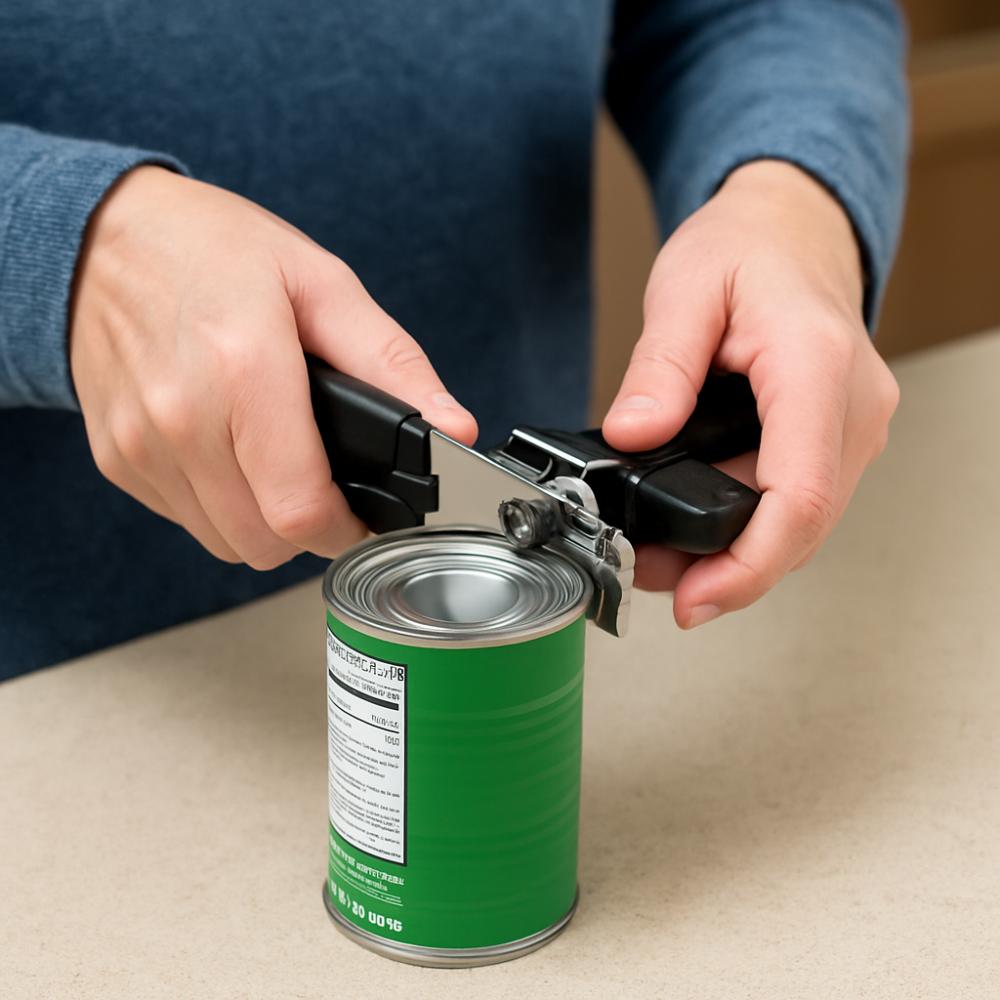 Trying a sideways grip on a manual opener can make alignment easier—especially for those with limited vision or dexterity.
🔌 Electric Can Openers: Button-Push Ease for the Win
If you have the counter space and consistent power, a plug-in electric can opener can be a game-changer.
Why I recommend them:
- No need to twist or clamp—just press and let it do the work
- Some models include magnet lifts for lid removal
- Great for those with arthritis or hand weakness
Just make sure the model you choose aligns easily and stays steady. I’ve added a bump dot to mark the alignment point and button on mine, so I can use it completely by touch. Bonus: the best models are also smooth edge openers—more on that next.
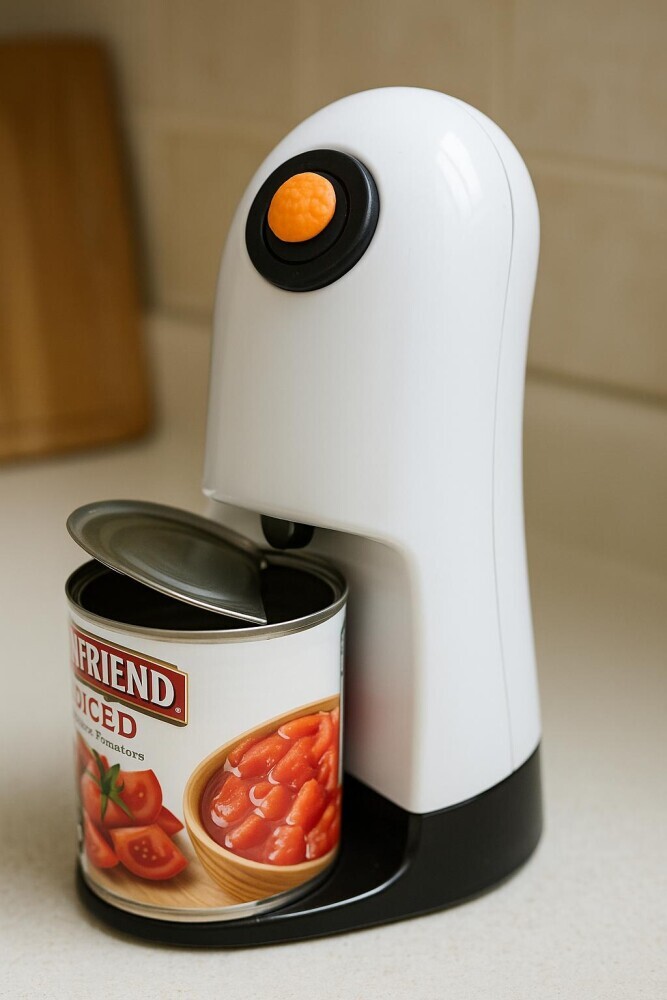 An electric can opener with tactile bump dot makes daily kitchen tasks safer and easier for those with low vision.
🔋 Battery-Operated Openers: Small, Smart, and Surprisingly Powerful
I admit, I was skeptical at first. These compact gadgets don’t look like much—but they’ve earned their spot in my drawer.
Why I keep one around:
- They’re portable and easy to store
- They wrap around the can and do the job automatically
- Perfect backup tool for power outages or travel
Just watch out for models that aren’t compatible with certain can sizes or shapes. And if you’re using it often, rechargeable versions are usually a better investment than battery-hungry ones.
✨ Smooth Edge Openers: The Real Heroes in My Kitchen
Here’s where things get really exciting—yes, I said exciting about a can opener. Whether manual, electric, or battery-operated, smooth edge openers (also called side-cut or safety openers) are in a class of their own.
Instead of digging into the lid from the top, these openers glide just under the rim, slicing neatly along the side.
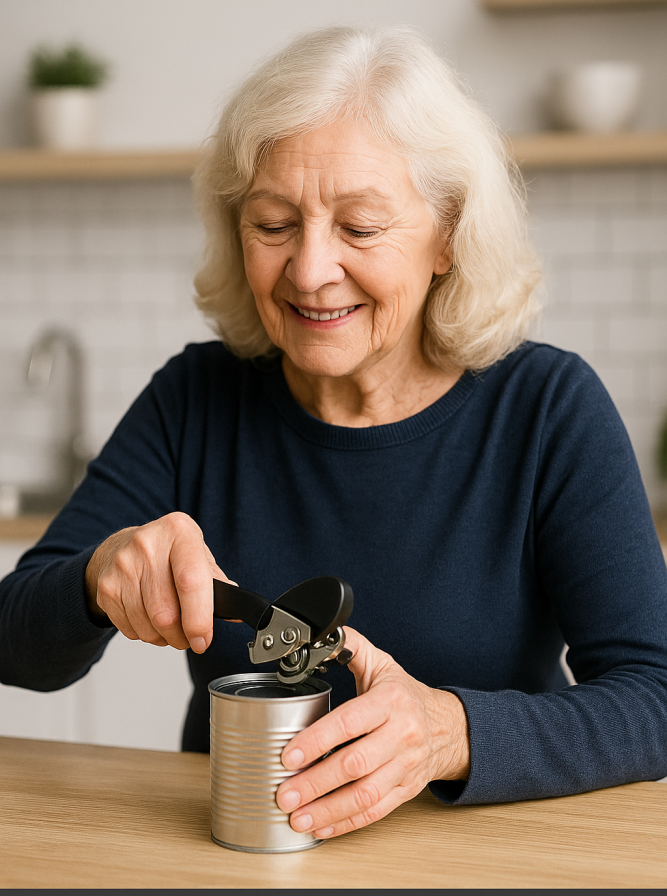 Using a smooth edge opener makes can opening safer and easier for seniors and those with low vision
Here’s why they matter:
- No sharp edges. I can run my fingers along both the lid and the can—no risk of cuts.
- Cleaner and safer. The blade never touches the food, keeping things more hygienic.
- Bonus: Reusable lids. Sometimes you can snap the lid back on to cover leftovers in a pinch.
They even work like a charm on pull-tab cans. Just hook the opener onto the edge opposite the tab and let it roll. It’s cleaner, easier, and spares your fingers the workout.
Low Vision Bonus Tip: I labeled the start button and base of mine with a bump dot—now I can align and operate it by feel, no guessing.
🏅 And the Winner Is… (At Least in My Kitchen)
After trying just about everything—from old-school cranks to sleek gadgets—two tools have truly earned their place on my counter. They’ve made opening cans safer, easier, and just plain less annoying.
🔍 What I Use (and Why It Works)
After trial, error, and a few bandage-worthy mistakes, I found my sweet spot:
- A plug-in electric smooth edge opener as my go-to
- A battery-operated side-cut opener as my backup
With tactile markers added, I can use either of them without having to rely on sight. Clean lid, no danger, no drama. I’ve also stopped worrying about drips, jagged metal, or food spilling mid-open. My hands—and countertops—are better off.
💡 It’s Just a Can Opener—But It’s Not Just a Can Opener
If you’re adapting your kitchen for low vision, don’t overlook this humble tool. The right can opener can:
- Prevent accidents
- Save time and effort
- Boost confidence in the kitchen
The right one makes you feel more capable—and that’s worth everything.
❓ Have you found one that works well for you? I’d love to hear about it. Sometimes, it’s the little victories—like opening a can without stress—that mark the biggest steps toward independence.