
A practical way to deal with stubborn jar seals—especially when nothing else seems to work
🔍 Let’s Be Clear—This Isn’t About the Lid
Removing lids from jars can be frustrating, and there are plenty of tools out there designed to help with that. I’ll probably share some of my favorites at some point. But that’s not what this is about.I should also be honest about one thing. Even though this isn’t about jar lids, I do occasionally reach for these when I’m dealing with small screw-off caps—like water bottles or smaller jars. They’re not designed for that, and I wouldn’t call them a go-to solution, but in a pinch, they can give just enough grip to make things easier.
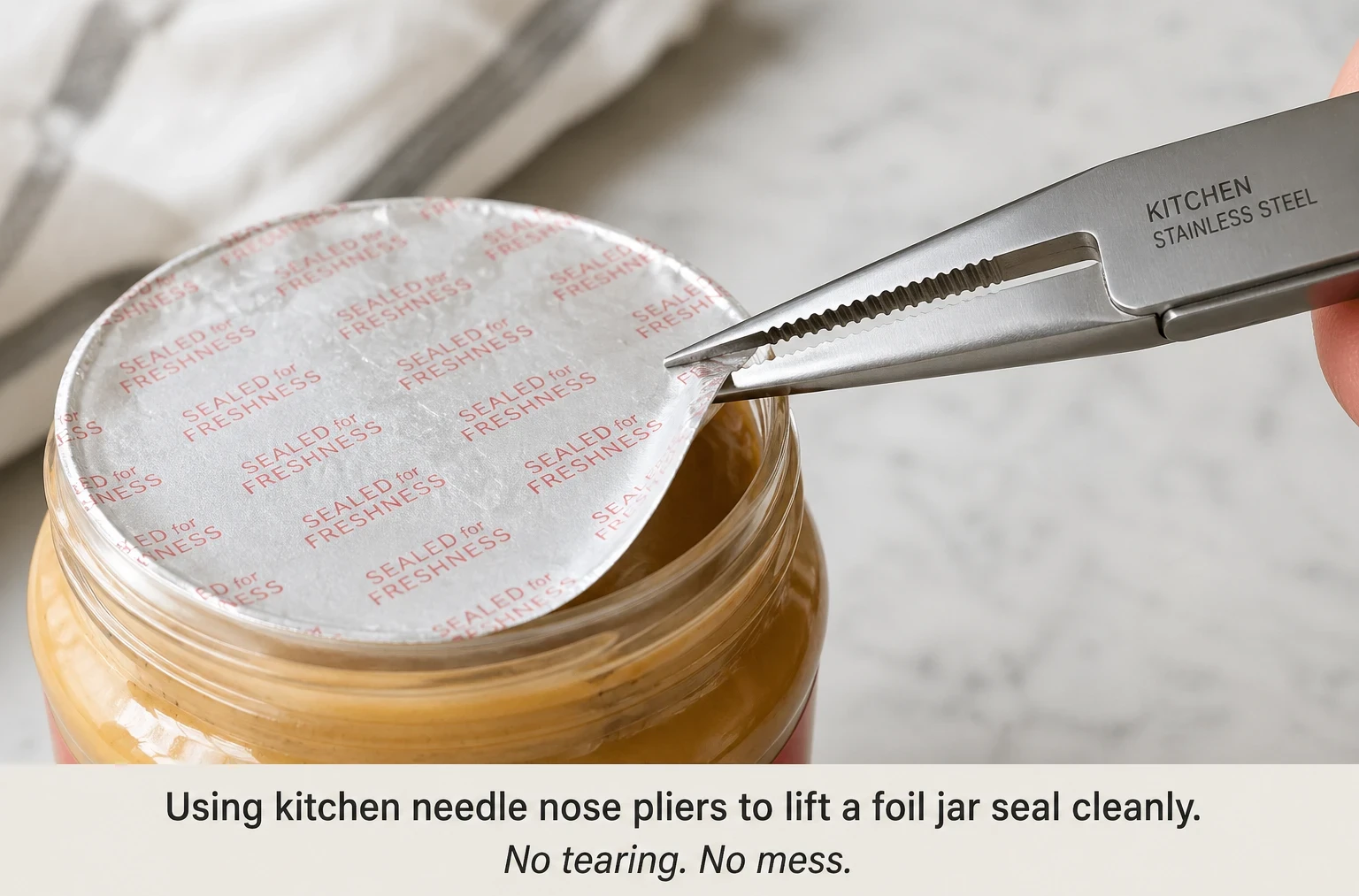
This is abouthow to remove a jar seal after the lid comes off—the inner seal. The one that doesn’t peel easily, or the one with the tab that’s so small it might as well not be there at all. And it’s not just jars. Yogurt containers, takeout condiment cups… anything with those thin foil or cellophane seals that are supposed to be “easy open” but never quite are.
I’ve spent more time than I care to admit trying to figure out how to remove a seal from a jar cleanly. Most of the tips I’ve found just didn’t work for me, especially when the seal didn’t cooperate the way it was supposed to.
🔪 What I Usually Do (And Why It’s Not Ideal)
Being the eternal optimist, I usually start the same way—picking at the edge of the seal, hoping that this time I’ll get it started cleanly. Sometimes it works… but most of the time, not so much.
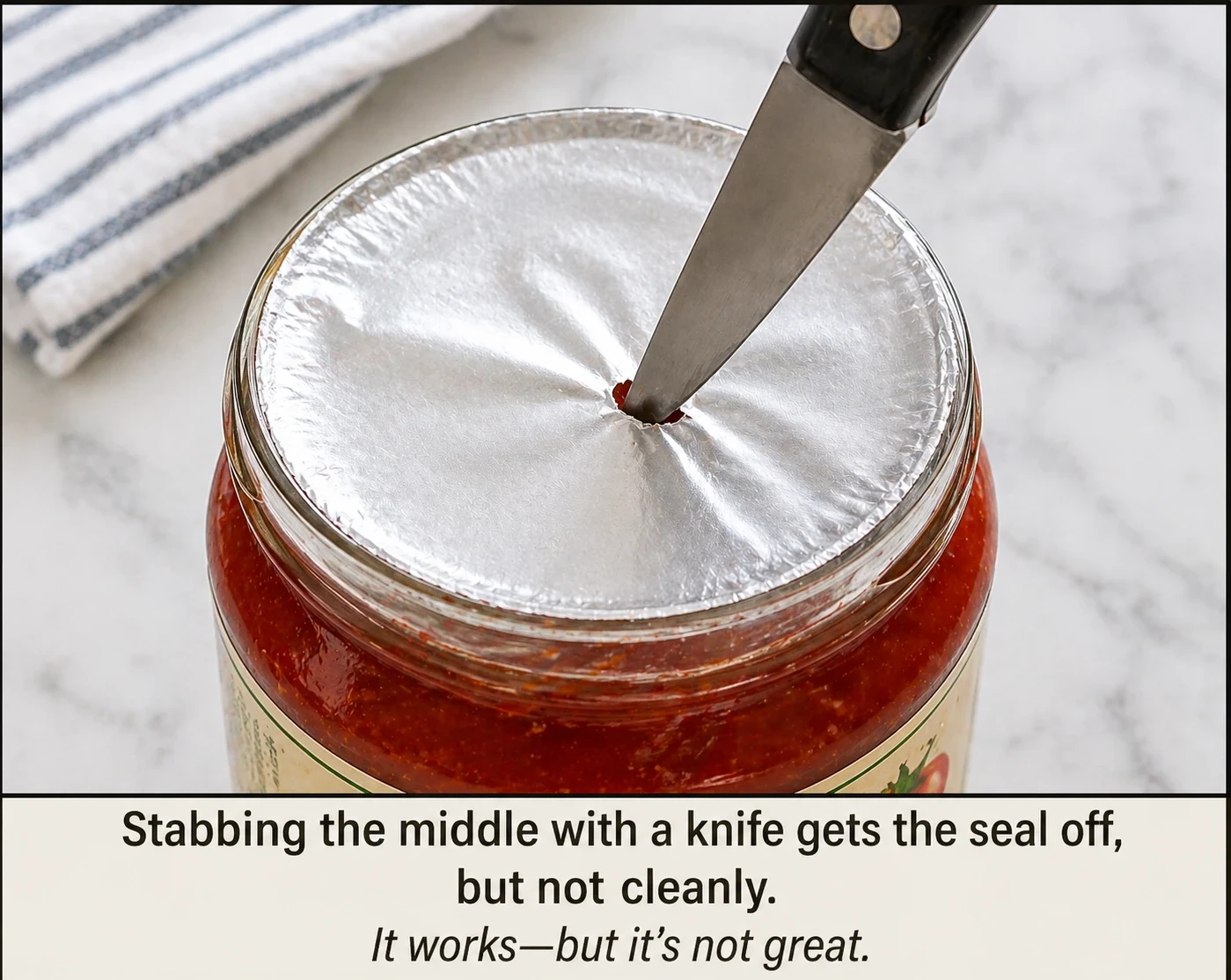
The next step is my go-to method: stab the middle with a sharp knife and peel it back from there. It gets the seal off, but not cleanly. There’s almost always a thin layer left around the edge, and once that happens, the lid never quite screws back on the way it should. It’s one of those little annoyances that keeps coming back every time you use the jar.
It works—but it’s not great. And it definitely doesn’t feel like the right solution.
🤔 What I Tried (And Why It Didn’t Help Much)
I’ve searched just about everywhere I can think of for better ideas. There are plenty of suggestions out there—hot water, loosening the edges, different tools—but none of them really solved the part I was struggling with.
The problem wasn’t removing the seal. It was getting a clean start without fighting it.
And that’s where most of the advice seemed to miss the mark for me.
🛠️ The Unexpected Tool That Changed Things
The solution came from a place I wasn’t expecting at all.
I was scrolling through Facebook reels one day and came across a short video talking about kitchen needle nose pliers—also called kitchen tweezers. I had never thought about using something like that in the kitchen, and honestly, I didn’t expect much.
But it was one of those light bulb moments.
I could immediately picture myself doing what I always do—picking at the edge, getting nowhere, and then reaching for a knife. This looked like a way to skip that whole process.
So I decided to try it.
✨ The First Time I Tried It
but it’s not great.
That alone was enough to convince me. But what surprised me even more was how well it worked on other things. The next morning, I tried it on a yogurt container, and it was the same experience—easy, fast, and no yogurt on my fingers.
And those little condiment containers from takeout? The ones where you can’t get them started, and then suddenly they open too fast and make a mess? This completely changed that too. I could control how it opened instead of reacting after the fact.
⚙️ What Changed (And Why It Works)
What really made the difference was control. Instead of trying to pinch something flat and slippery with my fingers, I could actually grip it securely and lift it at my own pace. That meant no guessing, no sudden tearing, and no mess.
It also meant I didn’t have to rely on that “all or nothing” moment you get with a knife. I could ease into it, adjust my grip, and work my way around the seal if I needed to. It turned something frustrating into something manageable.
🧴 It’s Not Just Jars
Once I started using these, I realized just how many everyday things this applies to.
Foil seals, plastic seals, tiny pull tabs—anything that’s hard to grab with your fingers becomes easier when you can get a firm grip on it from the start.
It’s one of those tools that doesn’t seem like a kitchen item at first, but once you use it, you start reaching for it more often than you expect.
💡 What These Are (And What to Look For)
These tools are actually most commonly used for removing pin bones from fish, which is probably why I had never heard of them before. Being a non-fish person, that just wasn’t on my radar. But after looking into it a little more, I found that they’re made from food-grade stainless steel and designed specifically for kitchen use, so they’re perfectly safe to use with food.
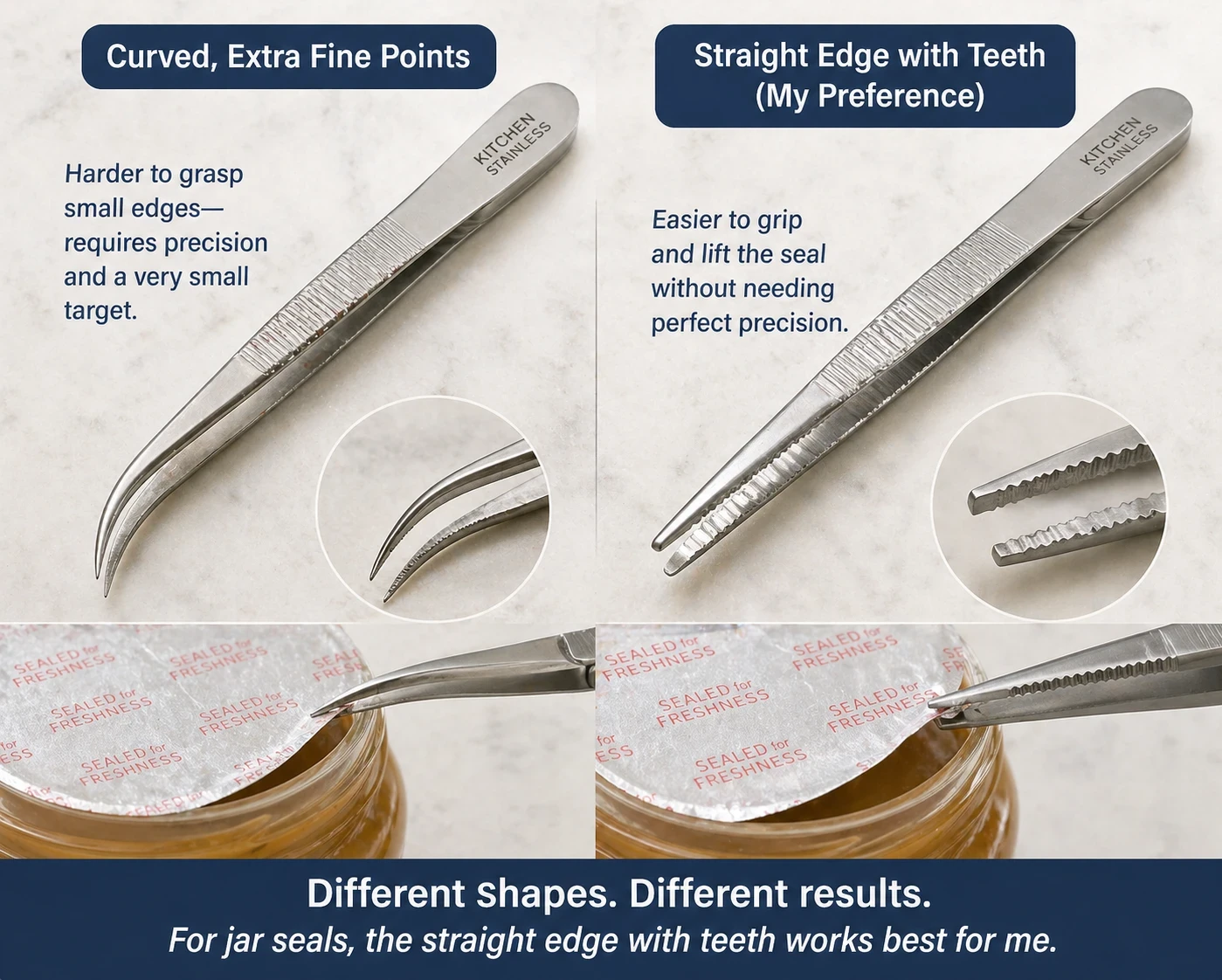
They also come in different sizes and shapes, and I’ve learned that not all of them work the same—at least not for me.
I’ve tried the ones with curved, extra-fine tips, and they just didn’t work well in this situation. To use those, you really have to be able to precisely grab a very small edge, and that’s exactly the part I struggle with. What works much better for me are the ones with a straight edge and small teeth (serrated jaws). They make it easier to get a solid grip without needing perfect precision, which makes the whole process feel more controlled and less frustrating.
So if you’re trying these for the same reason, that’s the style I’d recommend starting with.
When you’re looking for a pair, a few things make a difference:
- Food-grade stainless steel for safety and durability
- Serrated jaws for a better grip on small or slippery surfaces
- A size that feels comfortable and easy to control in your hand
They’re simple tools—but that’s part of what makes them work.
➤ If you’re interested in the one I ended up with, you can check it out here.
🤷♀️ Is This the “Best” Method?
I don’t know if this is the best way to remove jar seals. There are plenty of tools out there that claim to be the best, and some of them may work really well.
I just know this– this works for me. It’s easier than what I was doing before, it’s cleaner, and it takes away a lot of the frustration. And sometimes that’s all you need.
⭐ Why This Works Well for Low Vision
This is where I’ve found it especially helpful.
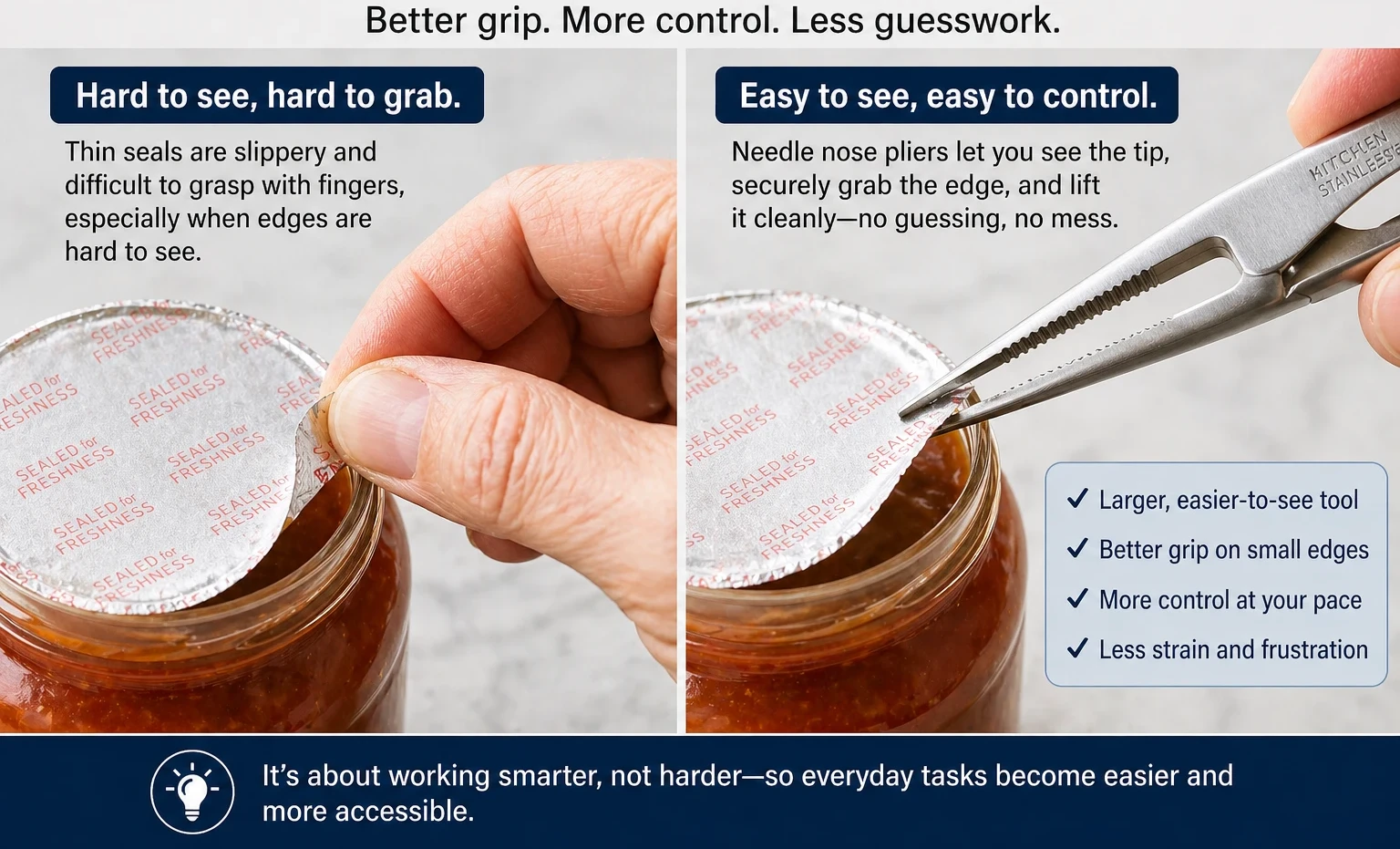
When your vision changes, tasks that depend on precision—like grabbing the edge of a thin seal—can become much more difficult. Using something like needle nose pliers makes that easier because you don’t have to rely as much on seeing exactly where your fingers need to go.
You get a more secure grip, better control, and less guesswork, which makes the whole process feel safer and more manageable. Some versions even include built-in magnifiers, which can be helpful for seeing what you’re working with more clearly.
And for those who rely more on touch, the longer reach of the pliers makes it easier to locate and manipulate small items without your fingers getting in the way.
🧭 Why I Still Keep These in My Kitchen Drawer
This isn’t a complicated solution, and it’s definitely not something I would have thought of on my own.
But after trying so many different ways to deal with stubborn seals, this is the one I keep coming back to. It’s simple, it works, and it solves a problem I run into all the time.
And honestly, anything that keeps me from reaching for a knife is a win.