
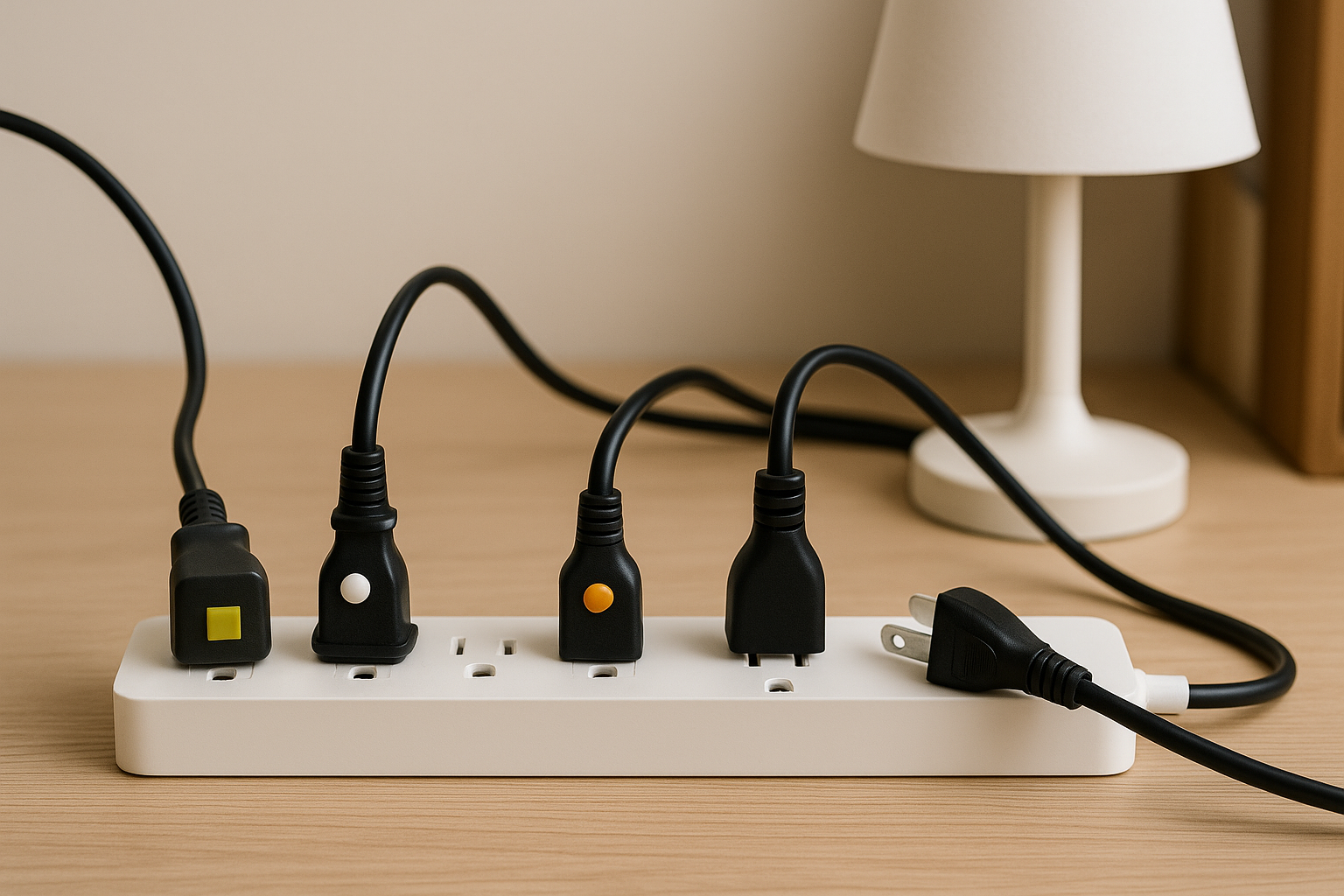
Smarter designs that solve everyday frustrations—without adding more clutter
Why Power Strips Became More Important Than I Expected
Outlets never seem to be where you actually need them.
They’re behind furniture, tucked under counters, or just far enough away to be inconvenient. I’ve found myself reaching, bending, or trying to line up a plug without really being able to see where it’s going—turning something simple into more of a process than it should be.
For a long time, I handled it the same way most people do. I grabbed whatever extension cord or power strip I had nearby and made it work. What I didn’t realize at the time was that finding easy to use power strips could make a bigger difference than you might expect.
But over time, those small frustrations started adding up.
It wasn’t just about reaching the outlet—it was the awkward angles, the extra effort, and the inconsistency of trying to plug things in smoothly. Sometimes I had to adjust the cord, reposition things, or try more than once just to get everything connected.
That’s when I started looking at these everyday tools a little differently.
Instead of asking, “Do I have enough outlets?”
I started asking, “Is this actually making things easier… or harder?”
And that’s where everything began to shift.
The Real Problem: It’s Not Just About More Outlets
At first glance, power strips and extension cords seem like simple solutions. Need more reach? Add a cord. Need more plugs? Add a strip.
But in real life, it’s not always that straightforward.
Traditional power strips tend to sit low to the ground, often behind furniture or tucked into corners. The outlets are lined up in a flat row, which can make them harder to access—especially when plugs are bulky or cords overlap each other.
Even something as simple as plugging in a device can turn into a bit of a juggling act:
- Reaching into a tight space
- Trying to line up the plug correctly
- Adjusting cords that don’t quite fit the way you need them to
And if visibility isn’t perfect—or you’re working in low light—it can take even more effort than it should.
That’s when I started to realize something important:
The issue isn’t just access to power—it’s how accessible that power actually is.
Some designs make things easier. Others add friction to something that should be simple.
Once I began paying attention to that difference, I found a few types of power solutions that genuinely made everyday tasks smoother, faster, and far less frustrating.
🔌 Extension Cords That Come to You (Not the Other Way Around)
One of the most helpful changes I made was switching from standard extension cords to ones that are designed to extend only when you need them.
Instead of dealing with a long cord stretched across the room—or trying to manage extra slack—these cords can be pulled out to the exact length you need and then retracted when you’re done.
That may sound like a small difference, but in everyday use, it changes how you interact with your space.
I’ve found this especially helpful indoors in places like:
- Kitchen counters
- Home office setups
- Living room side tables
Anywhere you might need power temporarily—but don’t want cords constantly in the way.
What I like most is the control.
Instead of reaching awkwardly toward an outlet, I can bring the cord closer to where I’m working. When I’m finished, it goes back out of the way instead of becoming one more thing to manage.
If you want to see examples of this type of setup, you can explore retractable extension cords designed for indoor use on Amazon.
And if you’re dealing with limited visibility, that flexibility matters.
Being able to pull the cord toward you instead of reaching for it makes the whole process simpler and more predictable.
🔌 Power Strip Towers (No More Crawling Under Furniture)

Power strip towers were one of those things I didn’t realize I needed until I tried one.
Unlike traditional flat power strips that sit on the floor, these stand upright—usually on a desk, counter, or nightstand—so the outlets are easier to reach and easier to find.
That alone makes a big difference.
Instead of bending down or reaching behind something, the outlets are right there at hand level. The vertical design also helps space things out, so larger plugs don’t block each other the way they often do on standard strips.
Many of these now include built-in USB and USB-C ports, which means you can plug in phones, tablets, and other small devices without needing extra adapters.
Some models also include retractable or adjustable cords, allowing you to:
- Extend the cord to the length you need
- Keep excess cord neatly stored
- Position the tower exactly where it’s most convenient
If you want to see the type of tower I’m describing, you can browse power strip towers with USB and retractable cord options here.
From a day-to-day standpoint, that reduces a lot of small frustrations:
- Less reaching
- Less repositioning
- Less guessing
And if visibility is a challenge, having outlets upright, spaced out, and within easy reach makes everything feel more manageable.
🔌 Compact “Donut” Power Strips (Flexible and Easy to Position)

This is one of my personal favorites—and probably the most adaptable option I’ve used.
These compact, round (or “donut-style”) power strips are designed to sit right where you need them—on a counter, desk, or table—rather than being tucked away out of sight.
What makes them stand out is how easy they are to position.
Many include retractable cords, which means you can:
- Pull out just enough length to bring the strip closer
- Place it exactly where it’s easiest to use
- Reel it back in when you’re done
That’s been especially helpful for me in the kitchen.
Instead of leaning toward a wall outlet or working at an awkward angle, I can bring the power strip right into my workspace.
Most also include USB and USB-C ports, which makes them even more versatile—no need to juggle charging blocks.
If you want to see examples similar to what I use, you can check out compact donut-style power strips with retractable cords here.
The layout also helps.
Outlets are spaced around the device rather than lined up, making them easier to locate by touch and reducing interference between plugs.
In everyday use, this setup feels:
- More flexible
- More controlled
- And a lot less frustrating
⭐ Why These Work Especially Well for Low Vision
Over time, I’ve learned that it’s not always the big changes that make the biggest difference—it’s the small adjustments that remove everyday friction.
Easy to use power strips and extension cords are a perfect example of that.
At first, I was just trying to make things more convenient. But certain designs didn’t just make things easier—they made tasks more manageable.
📍 Positioning Matters
Being able to bring the power source closer—rather than reaching for it—reduces guesswork and effort.
🔲 Layout Makes a Difference
Wider spacing, vertical orientation, and varied angles make outlets easier to locate and use.
🔄 Less Clutter, Fewer Steps
USB and USB-C ports eliminate extra adapters and simplify setup.
🎯 More Control, Less Frustration
When you control where and how you plug things in, everything becomes more predictable.
These are small changes—but they add up in a big way.
✨ A Few Words Before You Go
There’s no single “perfect” solution here.
What works best depends on your space, your setup, and what feels easiest for you to use.
But if you’ve ever found yourself reaching, adjusting, or trying one more time just to plug something in, it might be worth looking at the design of what you’re using—not just the number of outlets.
Sometimes, a small change in setup can make everyday tasks feel a whole lot easier.