Living with low vision can make favorite activities like reading, cooking, crafting, or simply checking the mail more challenging than they used to be. I’ve experienced firsthand how daily life changes when small print and fine details become harder to see. Thankfully, magnifiers can make a tremendous difference.
Over the years, I’ve tried several different types of magnifiers and learned an important lesson: there isn’t one perfect magnifier for every situation. The tool that works beautifully for reading a medicine bottle may not be the best choice for reading a book. A magnifier that helps in the grocery store might be completely different from the one you use at your desk.
The good news is that there are many options available. Understanding the different types of magnifiers can help you choose tools that fit your specific needs and make everyday tasks easier and more enjoyable.
🔎 Why Magnifiers Are Helpful For Low Vision
Magnifiers are simple tools that make things appear bigger. For me and many others with low vision, magnifiers add a new layer of independence. They open up opportunities to read, enjoy hobbies, and take care of tasks that might otherwise become frustrating or impossible.
Eye care professionals often recommend magnifiers as part of a broader low vision rehabilitation plan. The goal isn’t necessarily to restore normal vision. Instead, magnifiers help you make the most of the vision you have by enlarging details and improving visibility.
Research has shown that people who use the right magnifier for their daily activities often experience greater confidence and satisfaction when performing routine tasks. Knowing your options—and understanding the strengths and limitations of each type—can help you make better decisions and maintain independence in everyday life.
📚 Understanding the Different Types of Magnifiers
If you’re new to magnifiers, some of the terminology can be confusing. Terms like stand magnifier, dome magnifier, spectacle magnifier, and electronic magnifier sound straightforward enough, but it isn’t always obvious how they differ or what each one is designed to do.
If you’re wondering what these different types of magnifiers actually mean, here is a brief explanation of the most common options. Understanding these basic differences can make it much easier to decide which magnifier might work best for your own needs.
🛠️ Main Types of Low Vision Magnifiers
Handheld Magnifiers
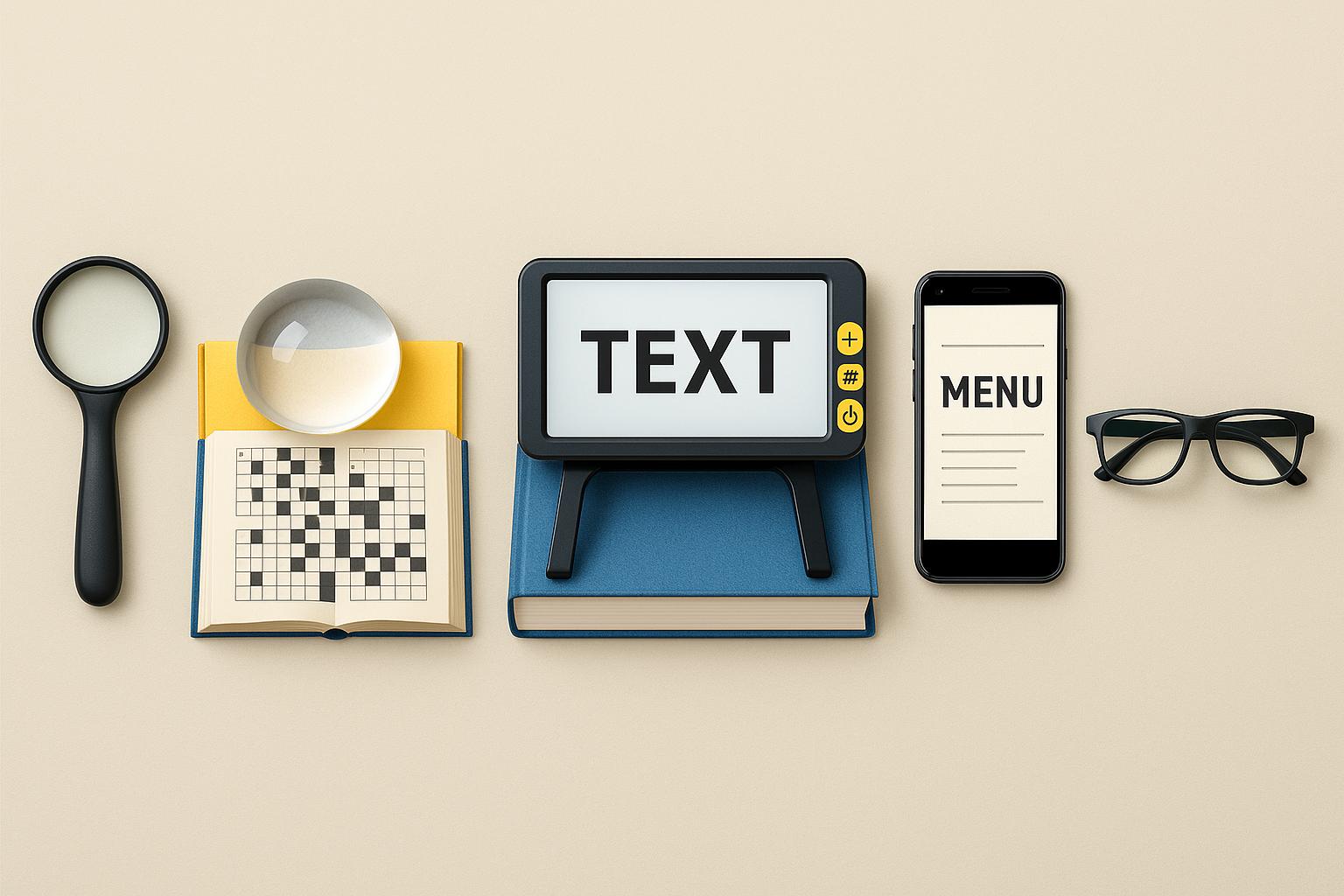
A handheld magnifier is probably what most people picture when they think of a magnifying glass. It consists of a lens attached to a handle and is designed for quick, portable use.
Handheld magnifiers are ideal for short tasks such as reading labels, checking prices while shopping, reading appliance controls, or sorting through mail. I often find myself reaching for a handheld magnifier when I need a quick answer rather than settling in for a long reading session.
Many models include built-in lighting, which can make a significant difference when working with small print.
Stand Magnifiers
A stand magnifier rests directly on the material you’re viewing. Instead of holding the lens at the correct distance, the stand keeps it positioned for you.
Because the lens remains stable, stand magnifiers are often easier to use for longer reading sessions. They can be particularly helpful for people who experience hand tremors or fatigue when holding a handheld magnifier for extended periods.
Many stand magnifiers also include built-in lighting to improve clarity and contrast.
Spectacle Magnifiers
Spectacle magnifiers are worn like eyeglasses and provide hands-free magnification.
These magnifiers can be especially useful for activities where both hands need to remain free, such as writing, sewing, knitting, model building, or preparing meals in the kitchen.
There is often a learning curve because the working distance is much closer than most people are accustomed to. Once you become comfortable with them, however, spectacle magnifiers can be an excellent option for many close-up tasks.
Bar and Dome Magnifiers
Bar magnifiers and dome magnifiers sit directly on top of the material you’re reading.
Bar magnifiers are designed to enlarge a single line of text at a time, making them particularly useful for following lines while reading bills, statements, or recipes.
Dome magnifiers are solid acrylic devices that gather and direct light through the lens. Many people find them surprisingly comfortable for reading newspapers, forms, maps, and other printed materials.
Because they rest directly on the page, both types can reduce the challenge of maintaining the proper focal distance.
Electronic Magnifiers
Electronic magnifiers use a camera and screen to enlarge text and objects.
These devices range from pocket-sized portable units to large desktop systems often called video magnifiers or CCTVs.
Electronic magnifiers offer several advantages over traditional optical lenses. Most allow you to adjust magnification levels, change contrast settings, alter colors, freeze images, and improve visibility in challenging lighting conditions.
I find electronic magnifiers particularly helpful for reading menus, ingredient labels, prescription bottles, forms, and other items with very small print.
💡 Choosing The Right Magnifier For Your Needs
The “best” magnifier is rarely the one with the highest magnification. Instead, it’s the one that makes a specific task easier and more comfortable.
When choosing a magnifier, consider:
Magnification Power: More magnification isn’t always better. Higher powers often reduce the field of view and can make reading more difficult.
Lighting: Good lighting can dramatically improve what you see. In many cases, better lighting helps as much as increased magnification.
Portability: Think about where you’ll use the magnifier most often. A pocket-sized device may be perfect for errands, while a larger model may work better at home.
Hands-Free Use: Activities such as writing, cooking, and hobbies often become easier when both hands remain available.
Comfort: The best magnifier is one you’ll actually use. Personal preference plays a major role in finding the right solution.
⚠️ Common Challenges And Simple Solutions
I’ve run into plenty of everyday frustrations while using magnifiers over the years. Fortunately, many of the most common problems have simple solutions.
Shaky Hands: Holding a magnifier steady can be difficult when you’re tired or dealing with hand tremors. Stand magnifiers and spectacle magnifiers can make reading much easier because they eliminate the need to hold the lens in position.
Image Distortion: High-powered magnifiers sometimes create distortion around the edges of the lens. Choosing a slightly lower magnification or a larger lens often provides a more comfortable viewing experience.
Eye Fatigue and Lighting: Good lighting can reduce eye strain significantly. An adjustable desk lamp often improves readability more than increasing magnification.
Switching Between Tools: No single magnifier works perfectly for every task. I keep several different magnifiers available and choose the one that best matches what I’m doing.
If glare becomes a problem, try adjusting the angle of your light source or using a matte surface beneath your reading material. Small changes can sometimes make a surprisingly large difference.
🌟 Why I Use More Than One Magnifier
One of the biggest lessons I’ve learned after years of living with low vision is that there isn’t a perfect magnifier.
A handheld magnifier may be perfect for reading a label in the kitchen. An electronic magnifier might be my first choice at a restaurant. Built-in magnification tools on my phone help me throughout the day, while a larger video magnifier is often more comfortable for longer reading sessions.
The breakthrough came when I stopped looking for one device that could do everything and started thinking of magnifiers as a toolbox instead. Each tool has its strengths, and having the right one available can make daily tasks far easier and less frustrating.
If you’re just beginning to explore magnifiers, start with the tasks that matter most to you. As you gain experience, you’ll likely discover that a small collection of magnifiers can provide far more flexibility than any single device ever could.