What They Are, When They Help, and How to Choose the Right One
Stand magnifiers weren’t something I ever pictured myself using. At first glance, they can seem a little bulky compared to handheld magnifiers — almost like gadgets from another era. But once I gave them a try, I realized how practical and reliable they can be.
Unlike handhelds that require steady hands, stand magnifiers rest directly on the page, making them easier to use for extended reading or detailed work. They may not be the flashiest option, but for many people with low vision, they’re one of the most comfortable and dependable tools available.
If you’ve ever wished for a way to read the newspaper without juggling a handheld magnifier or struggled to keep your hands steady, a stand magnifier might be exactly what you need.
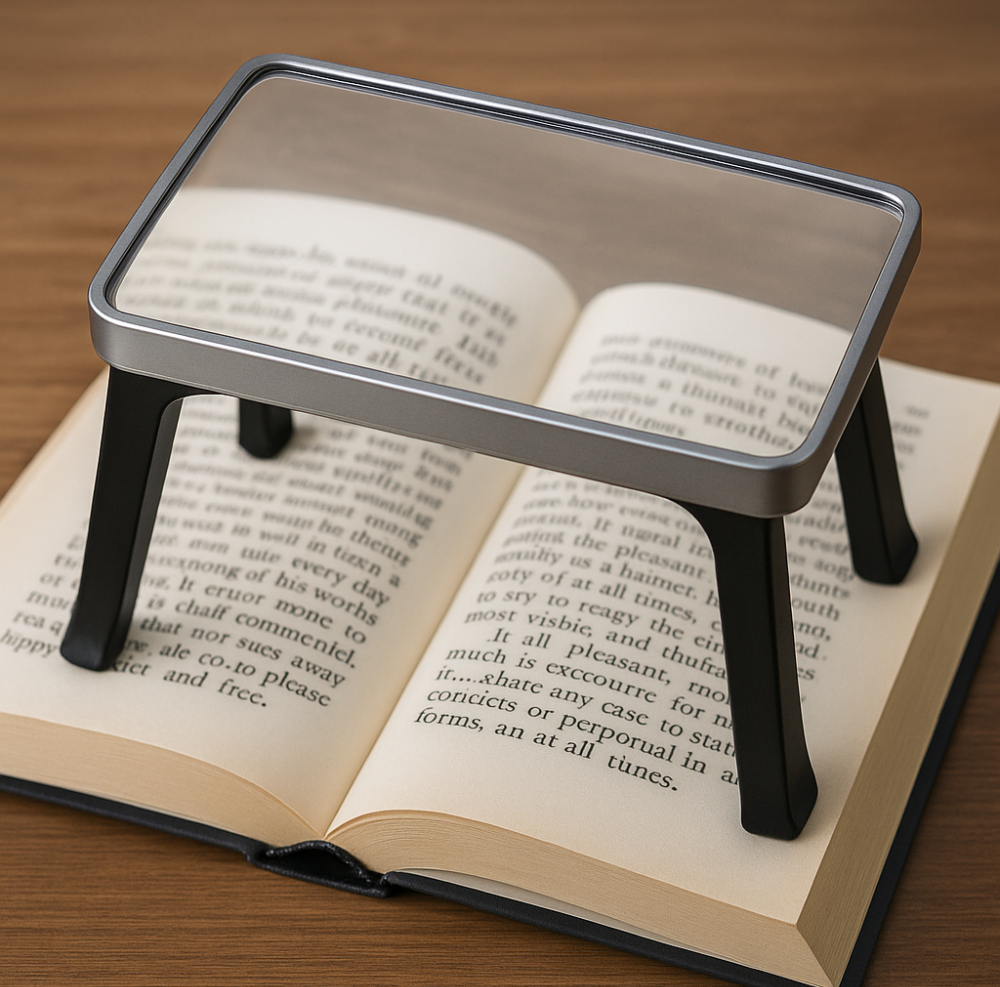 Stand magnifiers rest directly on the page, keeping print clear and steady.
🔎 What Makes Stand Magnifiers Different
Stand magnifiers work by resting directly on the surface of what you want to read or examine. Instead of holding the lens in midair, you simply slide the magnifier across the page or object.
This design has a few clear benefits:
- Hands-free use — your arms don’t get tired, and you don’t need to keep a steady grip.
- Consistent distance — since the magnifier sits right on the page, the focus stays clear without guesswork.
- Lighting options — many stand magnifiers now include built-in LED lights, which make a big difference when working in dim spaces.
They are especially helpful for people with tremors, arthritis, or fatigue, since the weight of the magnifier is supported by the page or surface itself.
🖥️ Desktop Stand Magnifiers
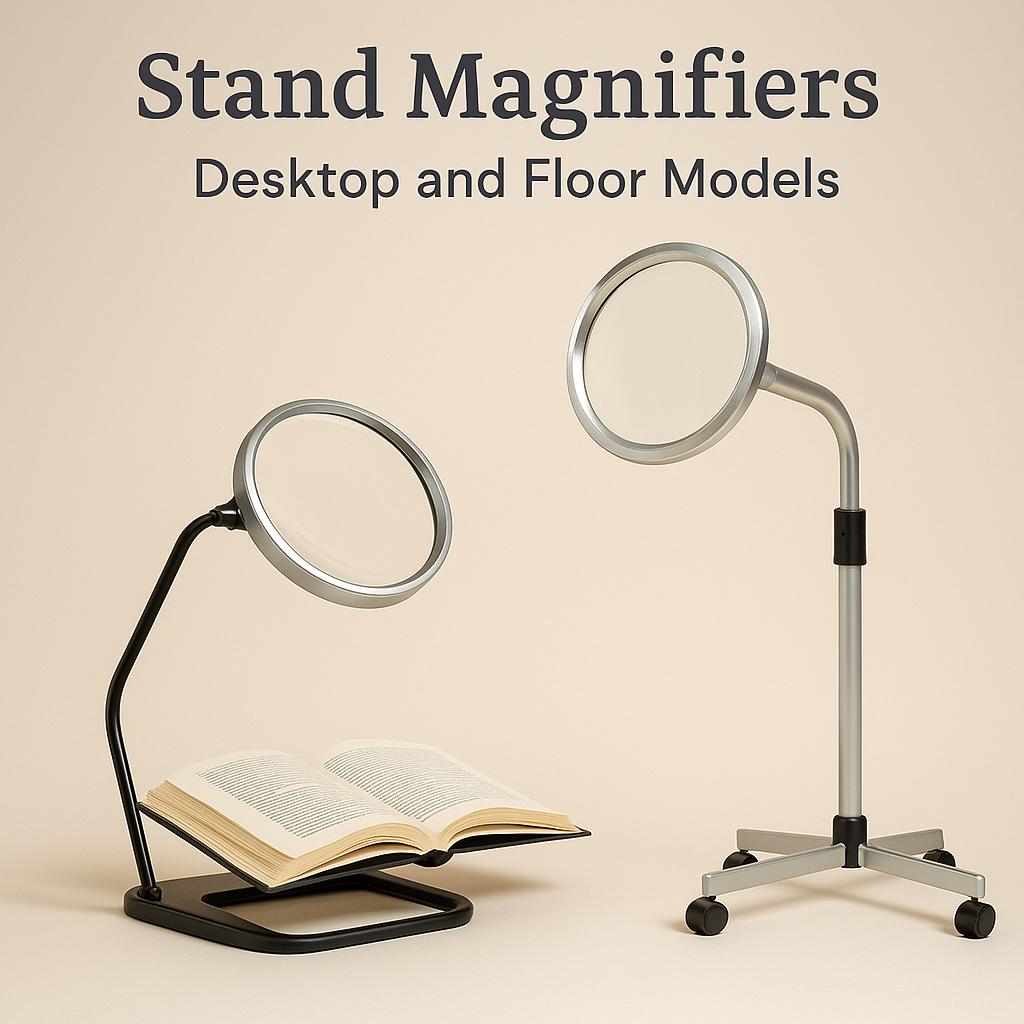
Desktop models are some of the most common types of stand magnifiers. They sit on a table or desk, making them ideal for reading books, mail, or newspapers. Some are simple, fixed-lens devices, while others come with adjustable arms or even magnifying sheets that cover an entire page.
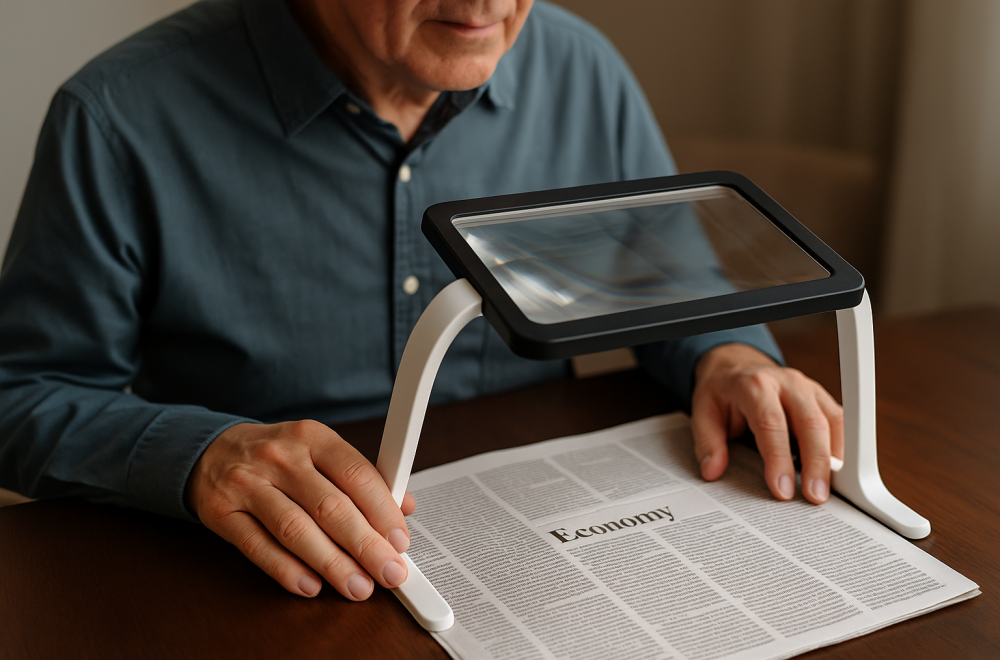 Desktop models make reading newspapers, books, and paperwork more comfortable
These are great for:
- Reading for longer periods without hand strain
- Balancing larger documents like bills or legal paperwork
- Enjoying hobbies such as crossword puzzles, knitting patterns, or stamp collecting
I personally find desktop stand magnifiers most useful when I need to read for more than a few minutes. They give my hands a break and keep the print sharp and steady.
📚 Portable and Compact Options
Not all stand magnifiers are big. Portable versions fold flat or come in compact designs, so you can tuck them into a bag or drawer. These are especially handy for quick tasks — like reviewing a menu at home before heading out or reading instructions on medication.
While they don’t replace a handheld or digital magnifier for on-the-go use, they bridge the gap between portability and stability.
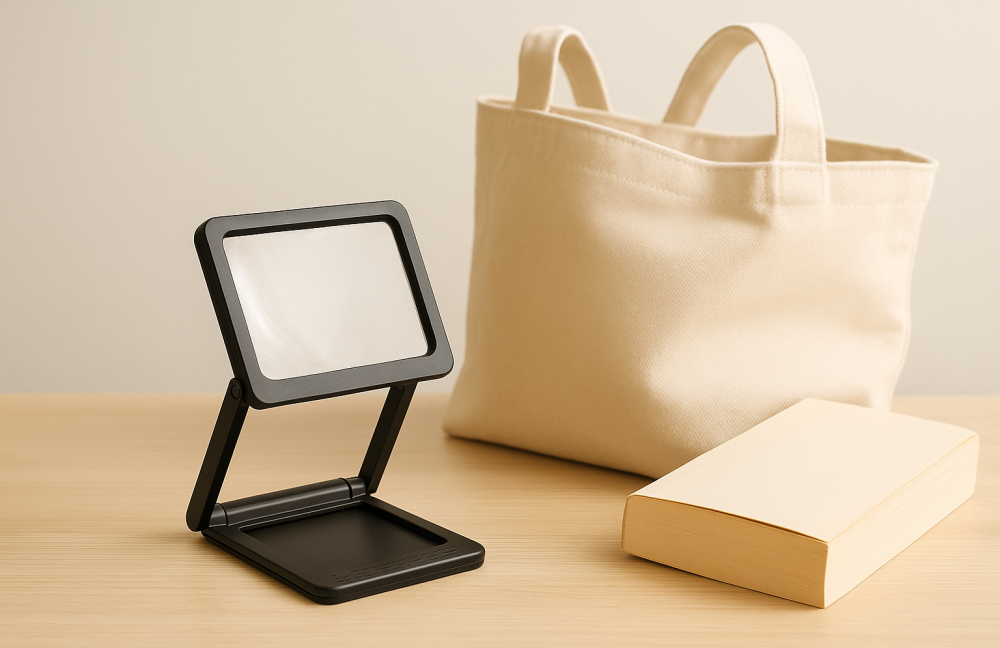 Portable stand magnifiers are lightweight and easy to take along for quick reading.
🪑 Floor-Standing Magnifiers
Floor models take things a step further. They usually feature a magnifying lens on an adjustable arm, mounted on a tall stand that sits next to a chair or sofa. These are especially popular with people who do needlework, crafts, or detailed repair work, since they free up both hands.
They’re bulkier than other options, but for anyone who spends hours on a hobby, a floor-standing magnifier can be a game changer.
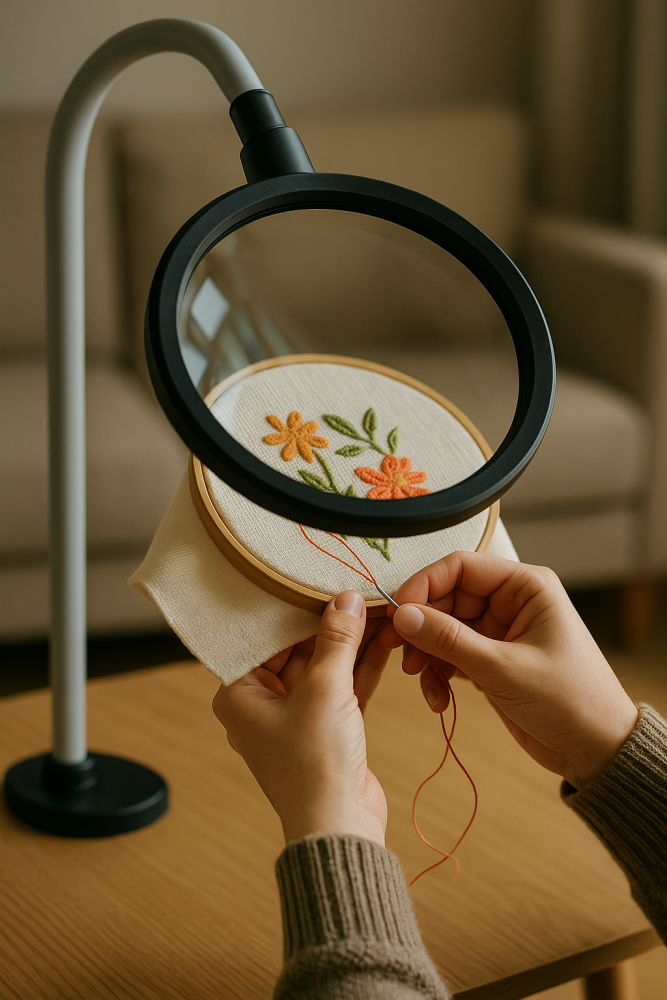 Floor-standing magnifiers are especially helpful for hobbies like sewing, knitting, or embroidery.
✅ Pros and ❌ Cons Compared to Handhelds
Pros:
- Easier on the hands — no need to grip tightly or hold steady
- Provide consistent, clear magnification
- Many include built-in lighting for improved clarity
- Great for extended reading or hobbies
Cons:
Less portable than handheld magnifiers
Can take up space on a table or floor
Usually offer only one fixed magnification strength
May feel old-fashioned compared to newer digital options
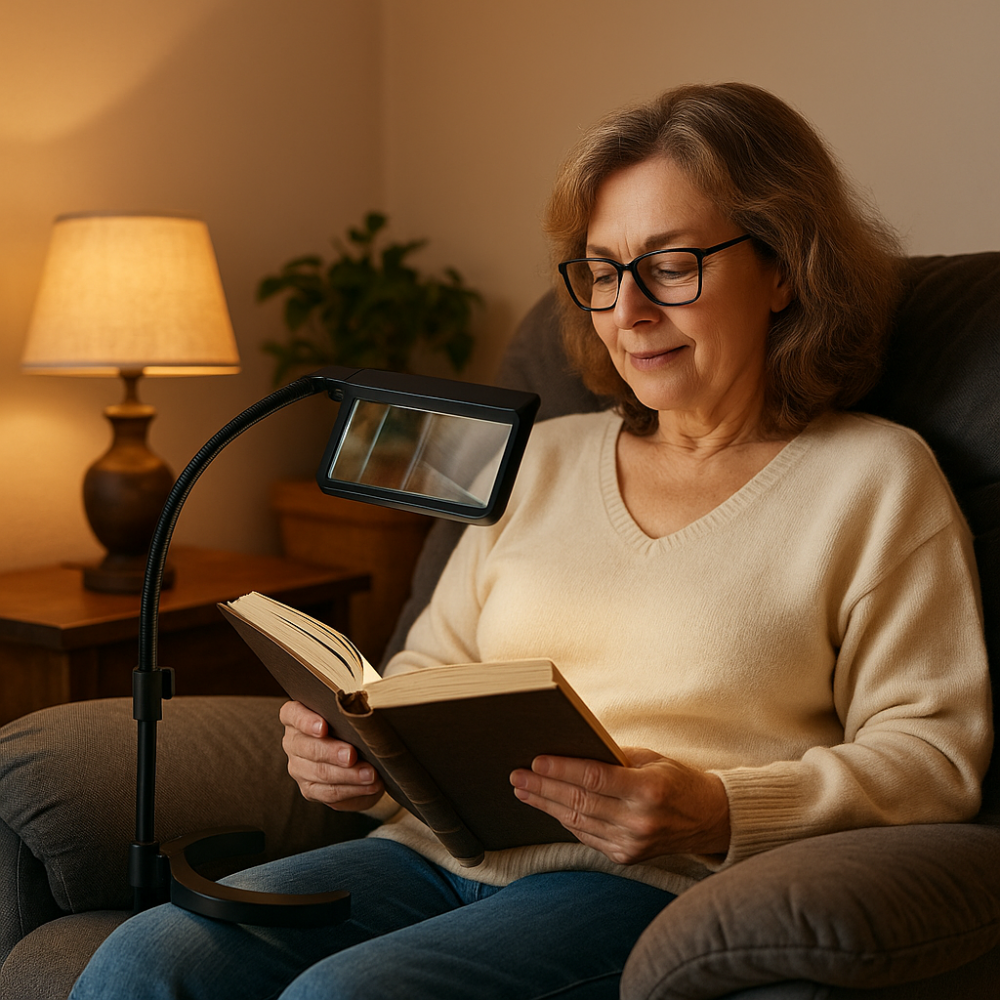 Magnifiers aren’t just practical tools — they can make reading more comfortable and enjoyable.
❓ Frequently Asked Questions About Stand Magnifiers
Before wrapping up, here are answers to some of the most common questions people have about using stand magnifiers for low vision.
❓ Are stand magnifiers good for reading books?
Yes, stand magnifiers are very useful for reading books, magazines, and newspapers. A desktop stand magnifier for reading sits directly on the page and provides steady magnification without having to hold it in place, which reduces strain during longer reading sessions.
❓ Which magnifier is best for crafts like sewing or embroidery?
A floor-standing magnifier for crafts is often the best choice. The large lens and adjustable stand let you keep both hands free while you work on sewing, knitting, or embroidery projects. Many models also include built-in lighting, which helps with detail work.
❓ What type of stand magnifier works best for macular degeneration?
People with central vision loss from macular degeneration often benefit from desktop stand magnifiers with bright LED lights. These provide consistent illumination and allow for comfortable reading or writing without having to hold the magnifier steady.
📝 My Tips for Everyday Use
From my own experience, I’ve learned a few things that make stand magnifiers more useful:
- Use them in good lighting. Even if your magnifier has built-in LEDs, extra light always improves clarity.
- Choose the right size. A small desktop magnifier might be enough for mail, but if you read entire books, a larger model or floor stand could be worth it.
- Combine with other tools. I still use handhelds and magnifier apps, but a stand magnifier is my go-to for steady, comfortable reading.
They may not look sleek, but they get the job done — and for many of us, that’s what really matters.
🔗 Related Articles You Might Find Helpful
- Magnifier Apps vs. Handheld Magnifiers: Which Works Best for Everyday Vision Needs?
- Magnifying Apps for Low Vision – The Essential Tools That Make a Real Difference
- Exploring the Different Types of Magnifiers for Low Vision