How to choose magnifiers for low vision based on real everyday needs, tasks, and experience
When I first started looking into low vision magnifiers, I honestly thought the process would be fairly simple. I assumed I would buy one magnifier, learn how to use it, and move on with life. Instead, I quickly discovered that magnification is far more personal — and far more complicated — than most people realize.
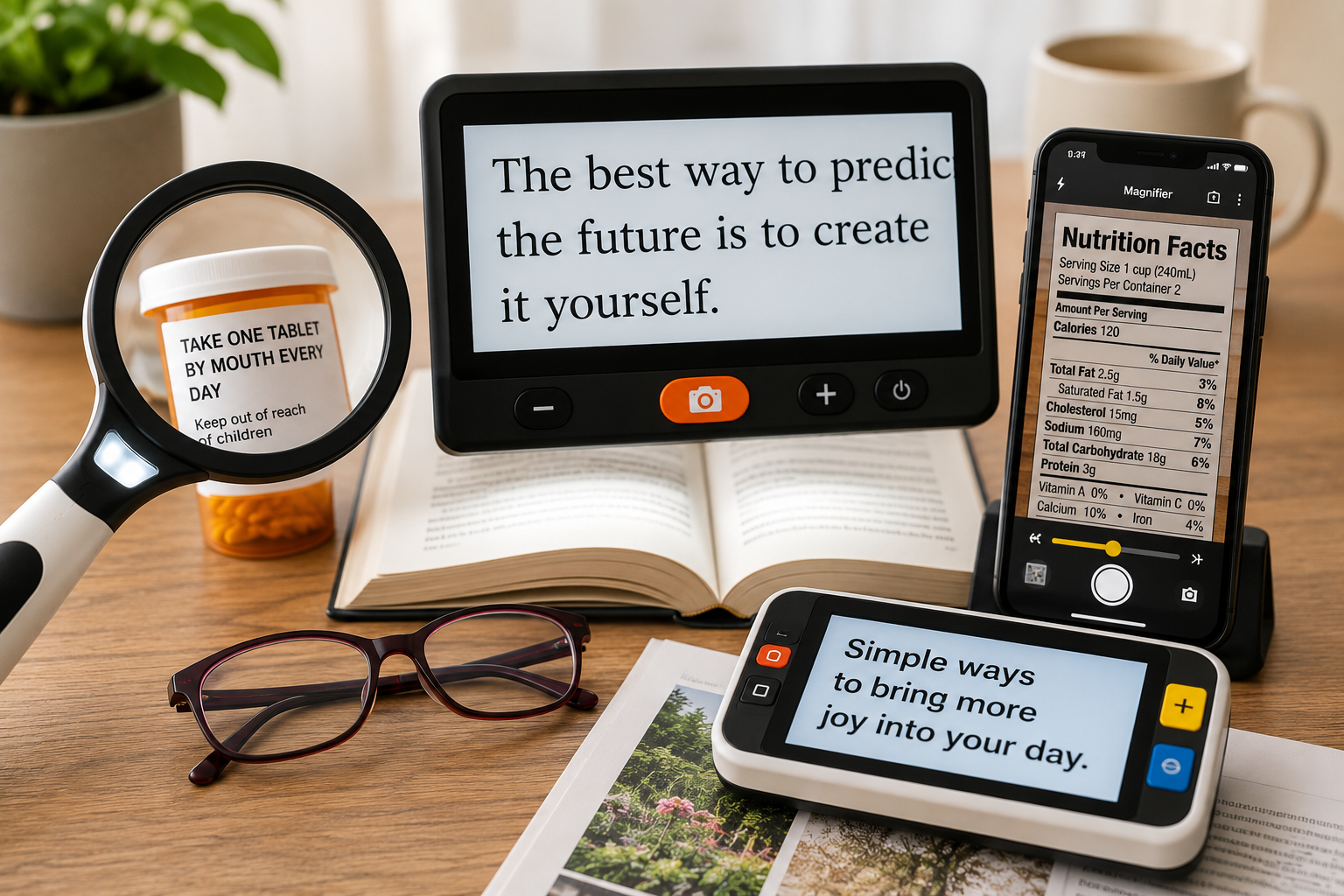
What works beautifully for one person may be completely frustrating for someone else. A magnifier that helps with reading mail may not work well for grocery shopping. A device that performs perfectly in bright lighting may suddenly feel almost useless in a dim restaurant. Some magnifying glasses for low vision are lightweight and portable, while others are designed for longer reading sessions at home where comfort matters more than convenience.
Over time, I stopped searching for the “perfect” magnifier and started building a system that actually worked for my daily life. That shift changed everything for me. Instead of trying to force one tool to solve every problem, I learned how to match different magnifiers to different situations. Some worked better for reading labels in the kitchen. Others were better for paperwork, shopping, recipes, or computer work.
That is really the part most people do not hear when researching low vision magnifiers. The goal is not necessarily to find one magical device that fixes everything. The goal is to make daily life feel less stressful, less exhausting, and more manageable so you can continue functioning as independently and comfortably as possible.
🔍 Why Using Magnifiers Is Important for Low Vision
One of the hardest parts of vision loss is not always the major things people imagine. In many cases, it is the constant buildup of small frustrations that slowly wear you down throughout the day.
Reading medication labels, checking expiration dates, looking at bills, following recipes, trying to read appliance settings, signing documents, or struggling with restaurant menus in dim lighting may sound minor individually. But when those frustrations happen repeatedly throughout the day, they begin to chip away at both confidence and independence in ways that are difficult to explain to people who have never experienced vision loss themselves.
That is why magnifiers eventually became so important to me. They were not simply about making words larger. They helped me continue functioning more comfortably in everyday situations that had gradually become mentally exhausting. I found myself hesitating less, second-guessing myself less, and relying less on other people for simple daily tasks.
For me, magnification became less about “seeing better” and more about functioning better. That distinction mattered far more than I expected.
Modern low vision aids for seniors and visually impaired adults have improved tremendously compared to what was available years ago. Today there are handheld magnifiers, digital systems, smartphone apps, wearable devices, and lighting solutions that can work together in ways that simply did not exist when I was first diagnosed. At the same time, I also learned fairly quickly that magnifiers are not one-size-fits-all solutions. Learning how to choose magnifiers for low vision takes patience and experimentation because vision needs vary dramatically from person to person.
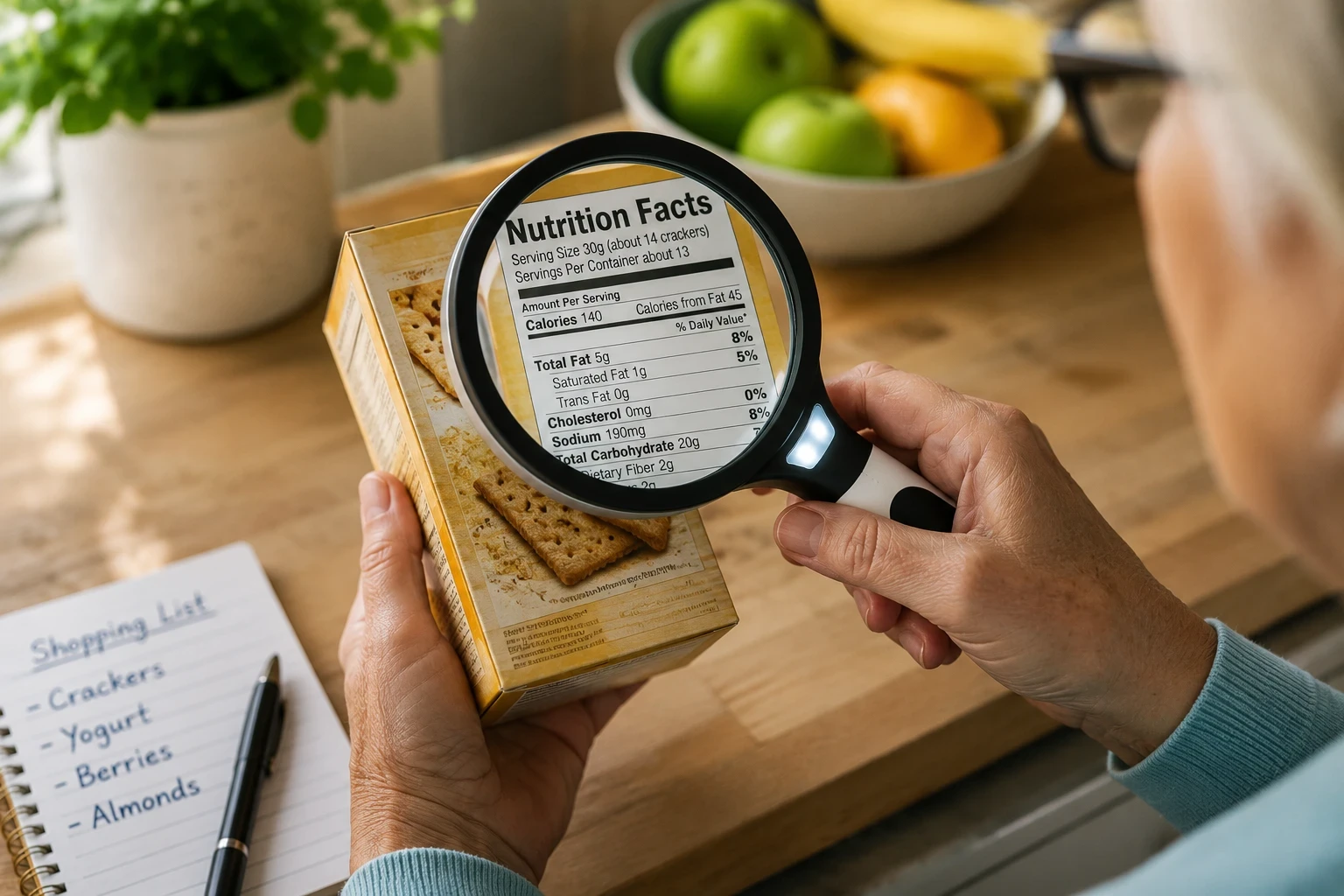 Reading food labels and nutrition information can become much easier with a handheld illuminated magnifier designed for everyday low vision tasks.
🧭 How to Choose a Magnifier for Low Vision
People often ask how to choose a magnifier for low vision, and the truth is that the answer depends heavily on how you actually plan to use it in real life.
Reading a book creates very different visual demands than checking a price tag at the grocery store. Looking at photographs, crafting, cooking, reading mail, using a computer, or sorting paperwork all require slightly different combinations of magnification, lighting, contrast, comfort, and working distance. That was one of the biggest surprises for me when I first started experimenting with different devices.
At first, I assumed stronger magnification would automatically solve the problem. Instead, I discovered that higher magnification often means a much smaller viewing area, which can actually make reading more tiring because you see fewer words at one time. I spent years thinking I needed stronger lenses when what I often needed was better lighting, better contrast, or a completely different type of magnifier.
Lighting turned out to be just as important as magnification in many situations. Some of the biggest struggles I had were not necessarily caused by print size alone, but by glare, shadows, poor contrast, or dim environments. Many top rated magnifiers for low vision now include built-in LED lighting because illumination can dramatically improve readability while also reducing eye strain and fatigue.
Portability also matters more than many people initially realize. Some magnifiers are excellent for carrying while shopping or traveling, while others are designed primarily for comfortable reading sessions at home. Hand strength, neck comfort, glare sensitivity, and even how steady your hands are can all affect which devices feel most useful over time.
Probably the biggest mindset shift for me was realizing that I did not need one magnifier for everything. I needed the right tools for specific situations, and once I stopped expecting one device to solve every problem, the entire process became far less frustrating.
📋 Things That Matter Most When Choosing a Magnifier
FeatureWhy It MattersLightingGood lighting often improves readability as much as magnificationViewing AreaHigher magnification usually means seeing less text at one timePortabilitySome magnifiers work best at home while others are better for travelComfortHand fatigue, neck strain, and glare can affect long-term useContrastHigh contrast settings can dramatically improve readabilityTask TypeReading books requires different tools than shopping or cooking
🖐️ Handheld Magnifying Glasses for Low Vision
Handheld magnifying glasses for low vision are still some of the most practical tools I use every day because they fit naturally into ordinary situations without requiring a complicated setup.
These are often the first magnifiers people try because they are portable, affordable, and fairly easy to understand. They work especially well for quick tasks like reading labels, checking receipts, viewing menus, reading instructions, or trying to identify small print around the house. I keep handheld magnifiers in several areas of my home because those small moments happen constantly throughout the day, often when I least expect them.
One situation that still stands out to me is standing in grocery stores trying to read expiration dates under terrible overhead lighting. Between glare, tiny print, awkward package angles, and crowded aisles, something that sounds simple can become surprisingly stressful. Having a lightweight illuminated handheld magnifier nearby makes those situations feel far more manageable.
Over time, I learned that lens quality matters far more than many people realize. Cheap magnifiers often create distortion around the edges, which becomes exhausting during longer use. Grip comfort also matters more than expected, especially for individuals dealing with arthritis, fatigue, or shaky hands.
Even with all the newer technology available today, handheld magnifiers remain some of the best magnifiers for vision impairment simply because they are practical, flexible, and easy to grab quickly during real-world situations.
👉 Browse handheld magnifiers on Amazon.
📖 Stand Magnifiers for Longer Reading Sessions
As my vision needs changed over time, I discovered that holding a magnifier steady for long periods could become tiring surprisingly fast. That is when stand magnifiers started making much more sense to me.
Unlike handheld models, stand magnifiers rest directly on the reading material, creating a more stable viewing experience while reducing hand strain. For longer reading sessions involving books, newspapers, recipes, mail, or paperwork, that stability can make a tremendous difference in comfort.
Many stand magnifiers also include built-in lighting systems that improve contrast while reducing shadows. That combination of magnification and lighting often creates a much more relaxed reading experience, especially for people dealing with fatigue or contrast sensitivity issues.
What I appreciate most about stand magnifiers is that they remove some of the constant repositioning that handheld magnifiers require. Reading begins to feel less like work and more natural again, which can be emotionally important after struggling with visual fatigue for long periods.
I discuss the differences more thoroughly in my article on stand magnifiers for low vision users who struggle with reading and contrast sensitivity.
👉 See stand magnifier options on Amazon.
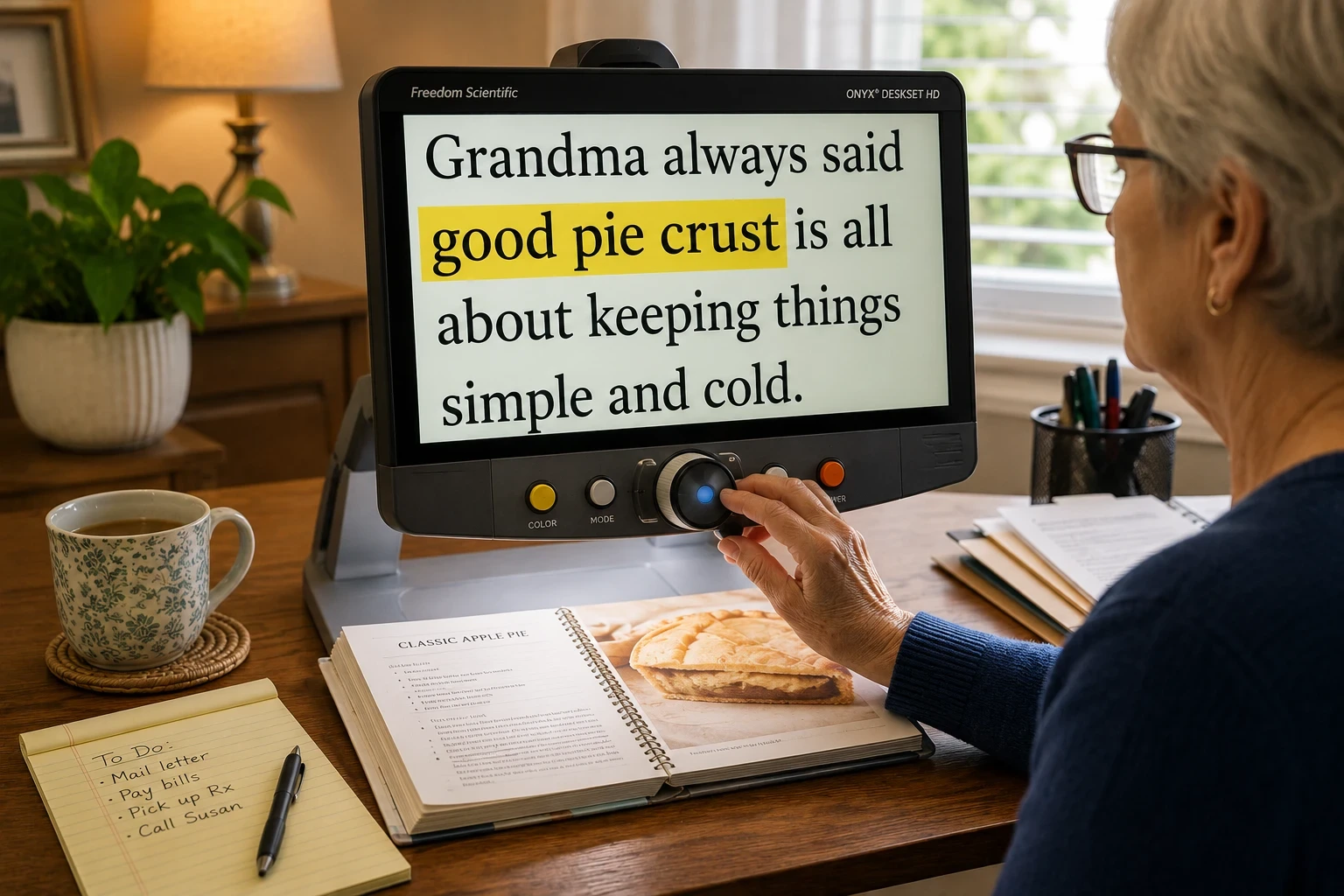 Digital magnifiers can provide larger viewing areas, adjustable contrast, and reduced eye strain for longer reading sessions and detailed daily tasks.
💻 Digital Low Vision Magnifiers Changed Everything for Me
Digital low vision magnifiers were one of the first assistive devices that truly made me realize how much accessibility technology had evolved over the years.
Instead of relying entirely on optical lenses, digital magnifiers use cameras and screens to enlarge text and objects electronically. Many also allow users to adjust brightness, contrast, colors, and magnification levels in ways traditional magnifiers simply cannot match.
For people with macular degeneration or contrast sensitivity issues, this flexibility can make an enormous difference. I still remember the first time I used a digital magnifier with high-contrast settings and realized I could comfortably read things that had become extremely difficult with standard magnification alone.
What surprised me most was that digital magnification was not simply about making words larger. In many cases, it made them clearer, sharper, and easier for my brain to process without as much visual strain.
Eye fatigue is something many people with low vision deal with constantly, and sometimes reducing strain matters just as much as increasing magnification. That became one of the biggest advantages of digital systems for me personally.
Some digital magnifiers are small enough to carry while shopping or traveling, while larger desktop systems are designed for serious reading, hobbies, paperwork, crafting, and detailed activities at home. The larger systems can be expensive, but they are also among the top rated magnifiers for low vision for people who need more powerful assistance and customization.
👉 Explore digital magnifiers on Amazon.
📱 Magnifier Apps and Other Low Vision Aids for Seniors
Smartphones quietly became one of the most useful low vision aids for seniors and visually impaired adults simply because many people already carry them everywhere.
The built-in Magnifier app on the iPhone has helped me countless times while shopping, reading labels, checking appliance controls, or trying to read small print away from home. Features like zoom, flashlight control, image freezing, and contrast adjustments can make everyday situations dramatically easier without needing to carry extra equipment everywhere.
Many people do not realize how advanced these apps have become. Some can now read text aloud, improve contrast, identify objects, or capture images for closer viewing later. While they are not perfect replacements for dedicated magnifiers, they can be incredibly practical for quick everyday situations.
Holding a phone steady for long reading sessions can still become tiring, and glare from screens sometimes creates additional challenges. But for portability and convenience, magnifier apps are among the most practical accessibility tools available today.
👉 I go into more detail about smartphone accessibility and magnifier apps in my article on magnifier apps for low vision users.
👓 Wearable Magnifiers and Smart Glasses
Wearable low vision technology has advanced dramatically in recent years. Devices that once sounded futuristic are now helping people read text, identify objects, recognize faces, and navigate daily life more independently.
Some wearable systems enlarge images directly in front of the eyes, while others use text-to-speech systems or artificial intelligence to provide information about the surrounding environment. These tools can be incredibly powerful, although they also come with a learning curve and significant cost in many cases.
What I find most encouraging is how quickly this technology continues improving. While wearable devices are not instant miracle solutions, they represent an exciting direction for the future of low vision support and independence.
👉 Explore the selection of wearable magnifiers on Amazon.
⚠️ What Magnifiers Cannot Do
One of the most important things I eventually learned is that magnifiers do not restore normal vision.
At first, I secretly hoped stronger magnification would somehow solve everything. Instead, I learned that magnifiers are really adaptation tools. They help people work around vision loss, not erase it completely.
Higher magnification often means a smaller field of view. Some devices require uncomfortable working distances. Lighting, glare, contrast issues, and fatigue may still exist even with magnification. That does not mean the tools are failing. It simply means low vision itself is complicated.
Learning how to use a magnifier for low vision effectively took time, experimentation, patience, and realistic expectations. Eventually I stopped looking for perfection and started focusing on practicality instead. That mindset shift helped me tremendously because it allowed me to focus less on what I had lost and more on what still worked well enough to support daily life.
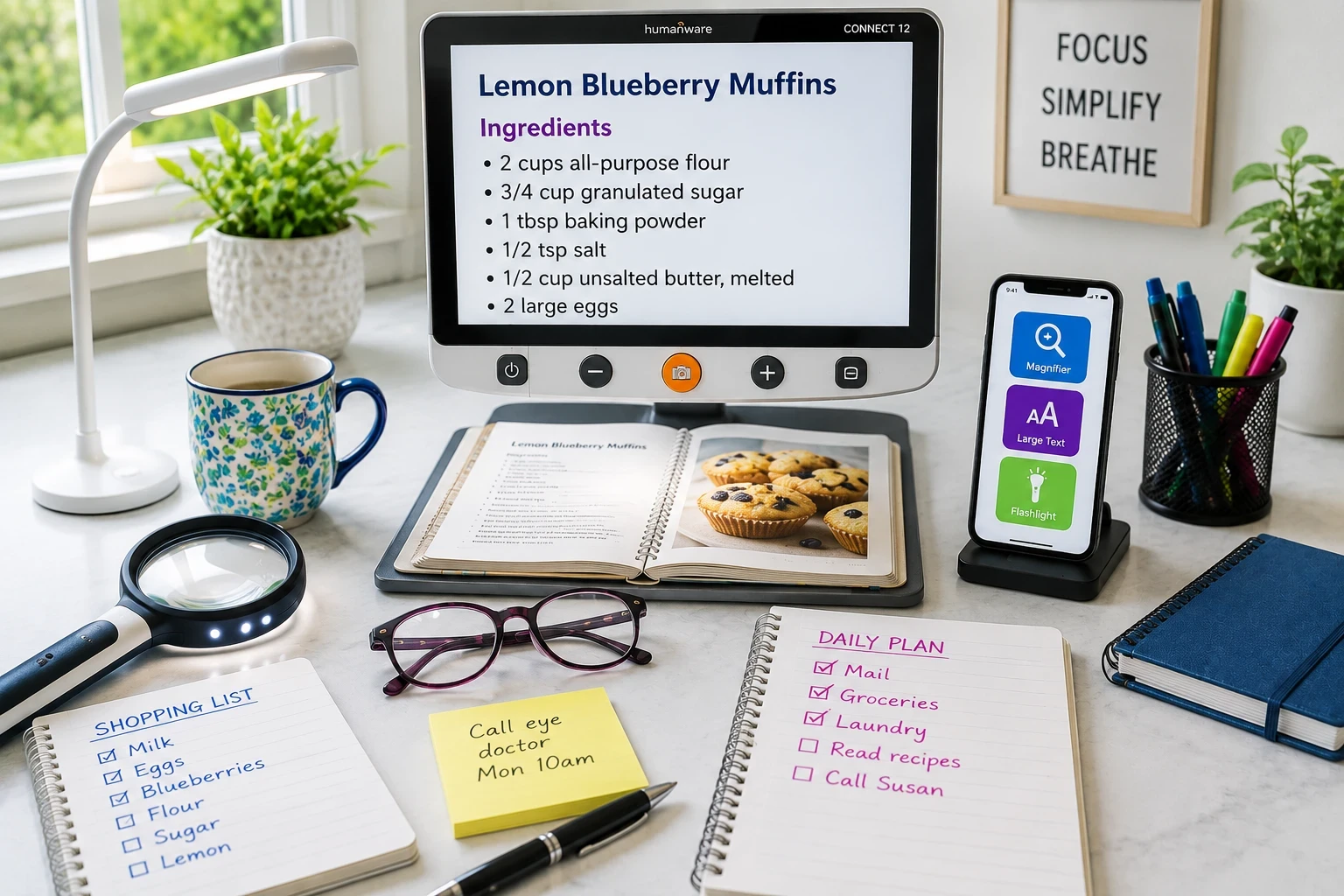 Many people with low vision create a personalized combination of magnifiers, lighting, and accessibility tools that work together for reading, cooking, organization, and everyday tasks.
🧰 The Magnifier Setup I Actually Use
Today, I think less about owning “a magnifier” and more about creating a workable system for everyday life.
I keep a handheld illuminated magnifier in the kitchen for labels and cooking instructions. I use smartphone magnification constantly while shopping or traveling. I rely heavily on computer zoom features during writing and online research. For longer reading sessions, I prefer more stable magnification that reduces hand fatigue and constant repositioning.
Lighting is also part of the system. In many situations, good task lighting improves clarity almost as much as magnification itself.
Most importantly, I stopped feeling guilty about needing multiple tools. People without vision loss naturally use different tools for different jobs every day. Low vision simply requires us to think more intentionally about which tools help us function comfortably and independently.
🌟 Living Better, Not Just Seeing Bigger
People often search for the best magnifiers for vision impairment hoping there is one perfect answer. What I have learned over the years is that the best solution is usually the one that fits naturally into your daily routines and helps you continue participating in the activities that matter most to you.
Magnifiers are not really about the devices themselves. They are about maintaining independence, reducing frustration, and continuing to handle everyday tasks with greater confidence and less stress.
Reading your own mail, following recipes, shopping independently, filling out paperwork, enjoying hobbies, or simply feeling more comfortable handling ordinary daily situations may seem small to other people. But when vision loss changes daily life, those moments matter deeply.
The good news is that there are now more choices than ever before. From traditional magnifying glasses for low vision to advanced digital systems and smartphone apps, modern accessibility tools offer flexibility that simply did not exist years ago.
Finding the right combination may take some trial and error, but that is perfectly normal. Low vision is personal, and the right tools are ultimately the ones that help you live with greater comfort, confidence, and independence every day.
📚 Companion Content